
Charles Bradshaw Smith - Community Energy Projects
Interview with Charles Bradshaw Smith, written by Andy Barrett
For my 24th and final interview and article for this series I met Charles Bradshaw Smith at the University of Nottingham’s Sustainable Research Building to discuss the key challenge of energy, community energy projects, and the pioneering work that is taking place in The Meadows. The production, distribution, and cost of energy is not the easiest thing to explain and so, as with many of these articles, there are a good number of links to other material. Hopefully this will help you understand the subject a little more as well as the challenges and opportunities that Charles’s work engages with.
Can I start by asking you to say a little about who you are and what you do?
I'm the CEO of a small organisation called SmartKlub Limited, which myself and a partner co-founded when I worked for E.ON, first as Head of Innovation in the UK and then in Europe. Our job is to help communities, councils, businesses, and developers to save carbon and money by using less energy and more renewables.
Community energy projects allow communities to use, own, and save energy in their communities. But the fixed costs of setting up these projects and schemes is very high, which is a real problem. The balance between the fixed costs that have to be paid and the revenue potential from the sustainable energy you can produce often doesn't work, which is why so many of these schemes struggle. Once I realised this, I decided that business model innovation is as useful as technological innovation, and decided to specialise in that. So that's what we do. We work on community energy business models.
Here is a short film – ‘What is community energy?’
Are you saying that if a neighbourhood community, for example, want to set up their own energy hub that it is currently prohibitively expensive to do so?
Yes. There are all sorts of costs connected to this. The consenting costs for instance, because if you want to use solar PV at any kind of scale, you have to get permissions of every nature you can imagine, which is very time consuming and costly. Then there are the costs of managing the system. And the amount of money that you can earn from the energy you produce is subject to market fluctuations. Everything about energy says you need scale to make it viable.
You need a real portfolio approach if you want to make it economically effective, so that you can always be offsetting some risks. Communities that tend to do small things in one way don't have these economies of scale or a portfolio of different supplies, so that if PV isn't doing very well at one moment they can shift to another form of supply. They tend to put very few eggs in one basket and are therefore subject to the whims of the market, the whims of government support, and the whims of regulation. Because government will support new technologies but then very quickly get bored of it and cut off the funding. So, any community energy scheme needs a robust and imaginative business model.
That sounds complicated.
It's not really. What business models are about is identifying three things: how do you create value? How do you distribute that value? And how do you capture value – how do you get paid? So, a business model is just a way of organising your scheme with those three things being absolutely central, which can make a massive difference to the viability of projects.
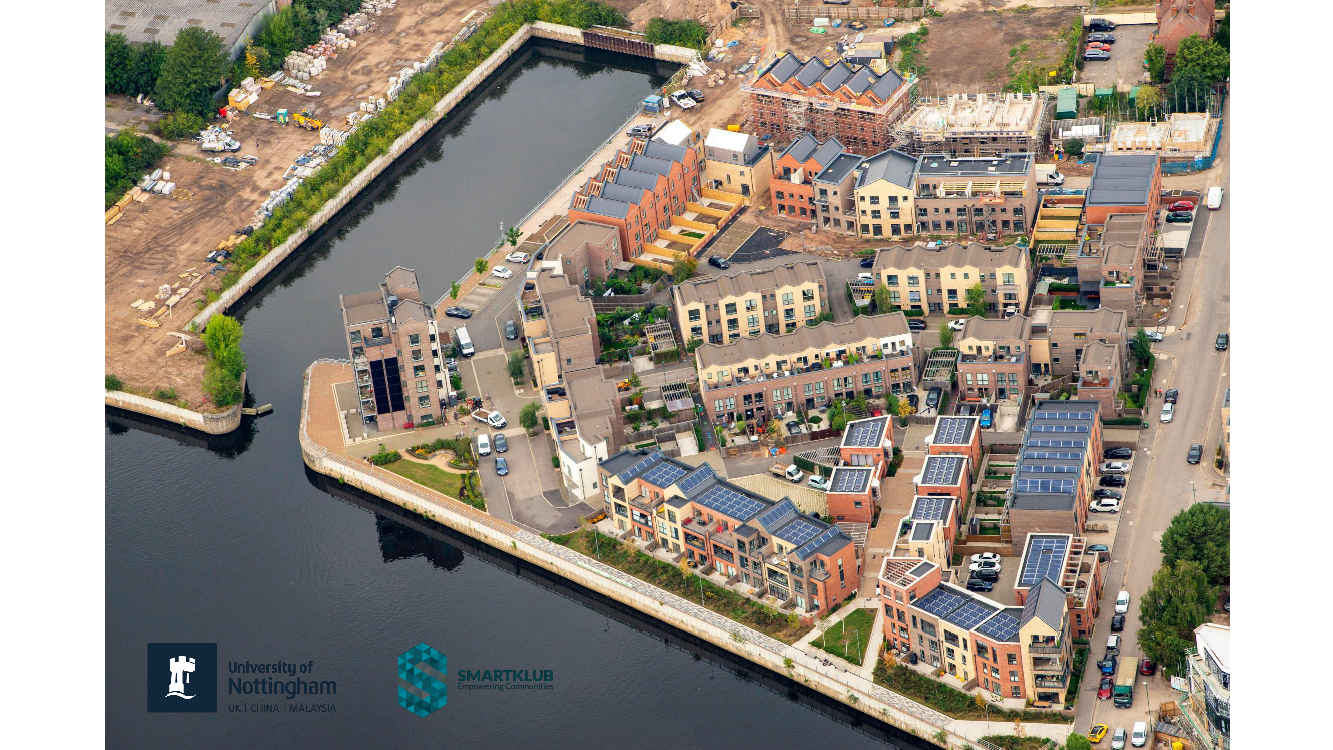
TRENT BASIN PROJECT WITH ROOF TOP SOLAR ARRAYS
Do people approach you to support them with this or do you approach them? And what kind of projects are you engaged in?
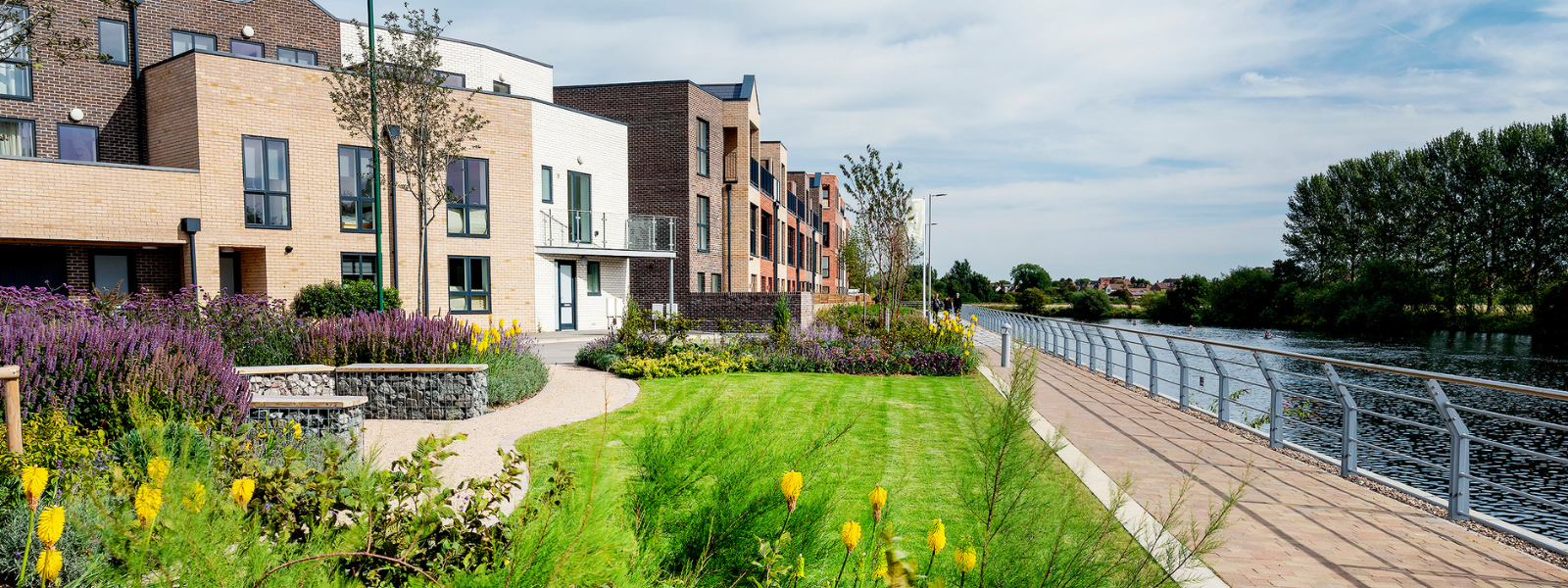
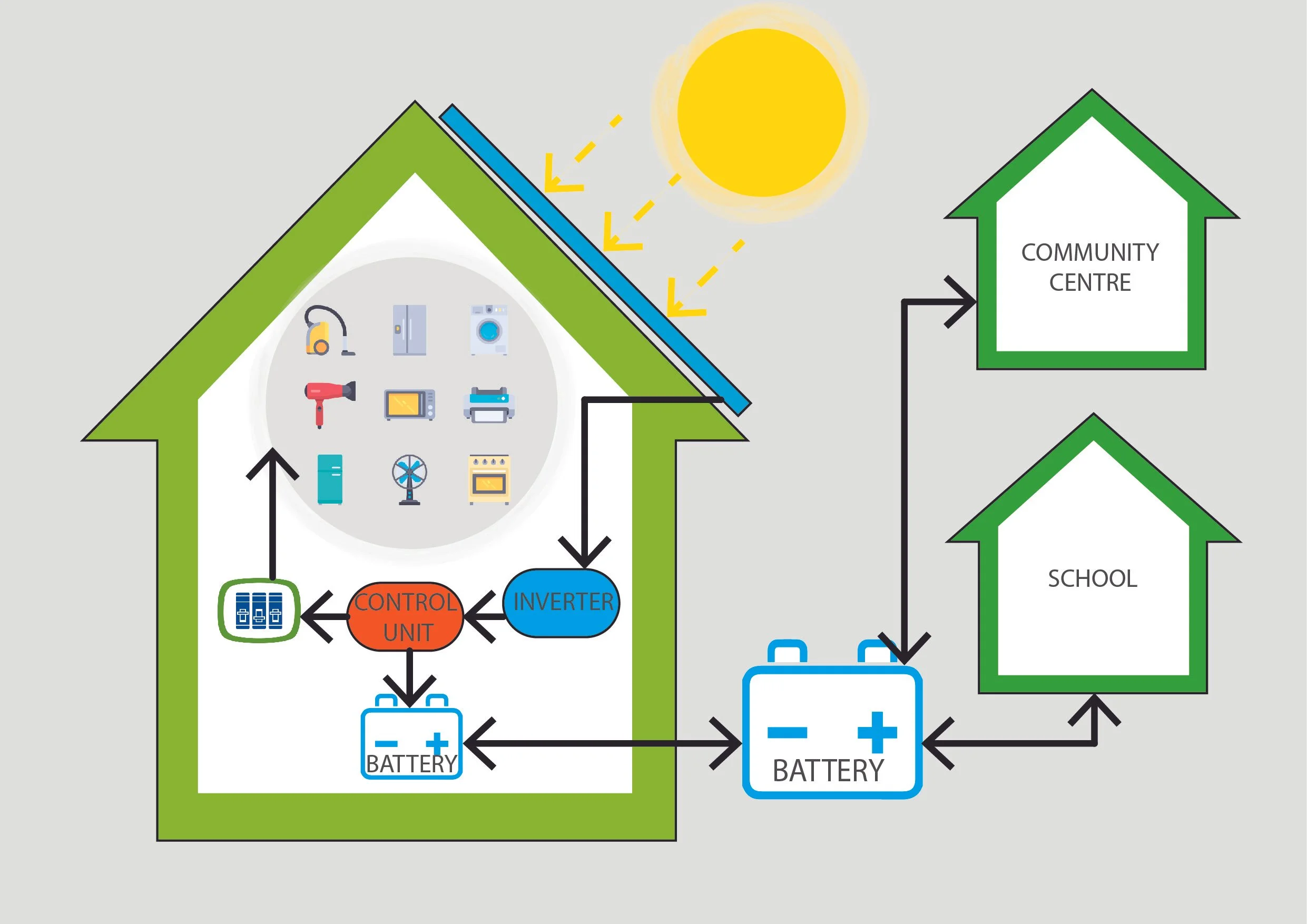
People approach me; and I have a strong working relationship with the University of Nottingham, which began with me working on the Trent Basin project. This is a housing development of energy-efficient homes on the banks of the River Trent that wanted to form an ‘an active energy community’ with solar PV on all of the rooftops feeding a community battery that at the time was the largest in Europe. The success of the project combined technology and business models where solar energy produced from the individual homes was sent to an energy centre that then determined where the energy was best placed to be used – whether that’s in residents’ meters, to reduce their energy bills, or out to support the grid where income is generated.
Energy is a market, and energy has a half hourly price which fluctuates from a few pence per kilowatt hour to sometimes pounds per kilowatt hour. I know that may sound absurd but managing this is essential to the success of community schemes, and so one of the main things I work on is how and when to sell the energy that is generated back to the grid to get the most value from that energy.
The initial setup at the Trent Basin project meant that all of the energy generated by the homes went into the battery, and then the battery exported to the grid when prices were good. Generally during the working day, between the morning peak and the evening peak, energy is reasonably cheap and the sun is out, so that's not a good time to sell it. You should save that energy for the evening peak and then sell it to the grid at that time when people need energy, when they get home from work and start cooking, heating water, and all of those things.
The success of that project led to me working in Africa through a Nairobi-born academic here who was interested in whether these business models could be applied to the Kenyan environment. That was working with ten schools that were either off-grid, or had an illegal and expensive intermittent energy connection. The business model we created allowed them to borrow money from a bank, invest in solar PV and battery technology, and then to use the savings from the firewood costs (which had been using for cooking) to run IT classes.
That’s a good example of how a community energy business model is not just about saving money but looks at how it can impact the wider social and educational aspects of that community. We used the energy generated outside of school hours for the community to share the cooking facilities, because clean cooking is really important. A lot of women cook in closed smoky environments which is really bad for their health; and if you stop using firewood you’re also saving carbon.
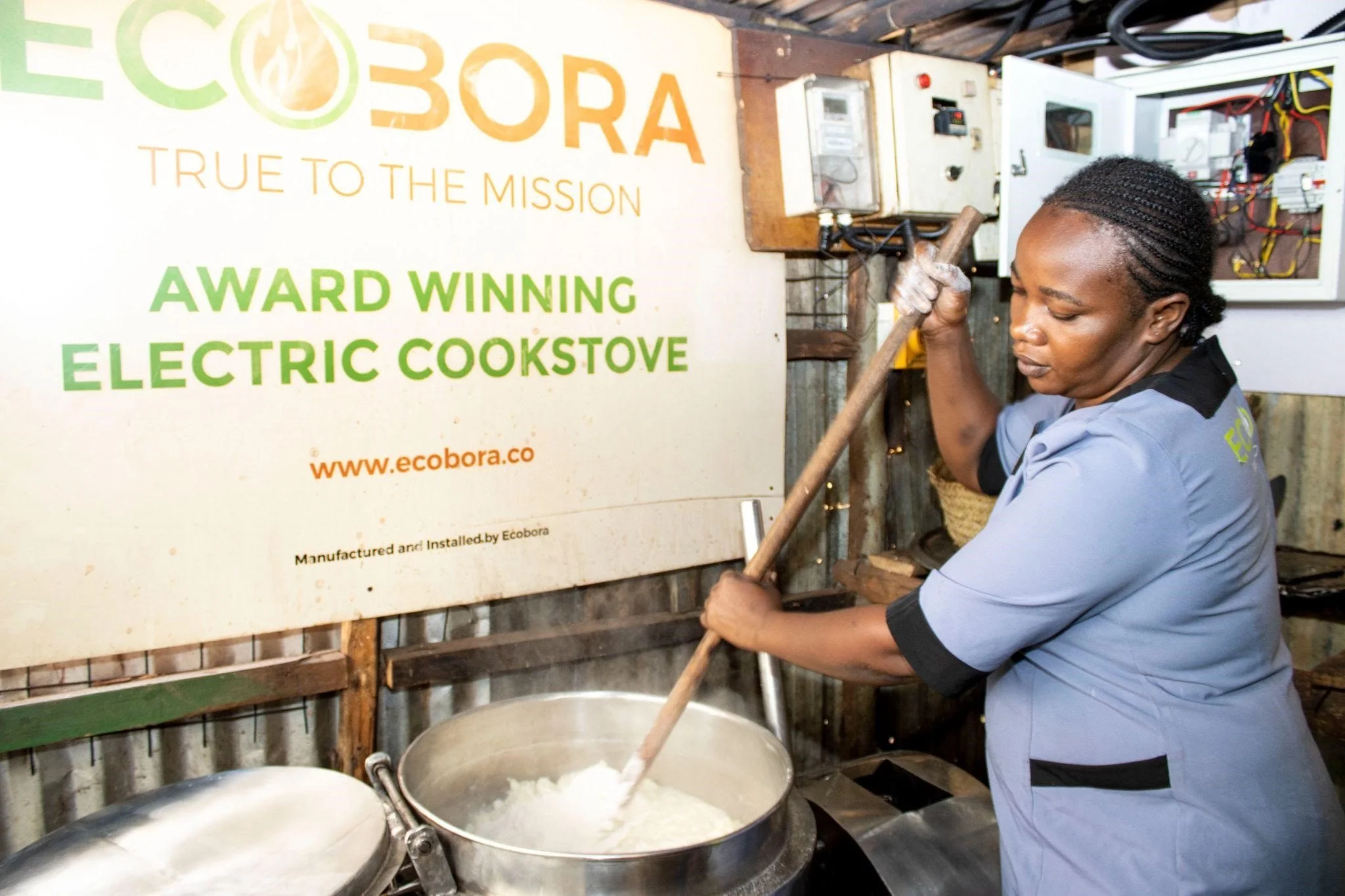
PROSPERITY SCHOOL COOK, PURITY SIMUYU, PREPARES PUPIL'S LUNCH IN THE HEART OF KANGEMI INFORMAL SETTLEMENT, NAIROBI’.
We ran adult IT classes in the evenings to help people become more employable. We ran water pumping services so cheap water was available, and ran laundry services which freed up people’s time. The business model allows the schools to earn enough revenue from their excess energy outside of the school day to repay the loan to the bank over seven years. After that they can make more money, improve the school facilities, and still have another 15 to 20 years use of the energy assets.
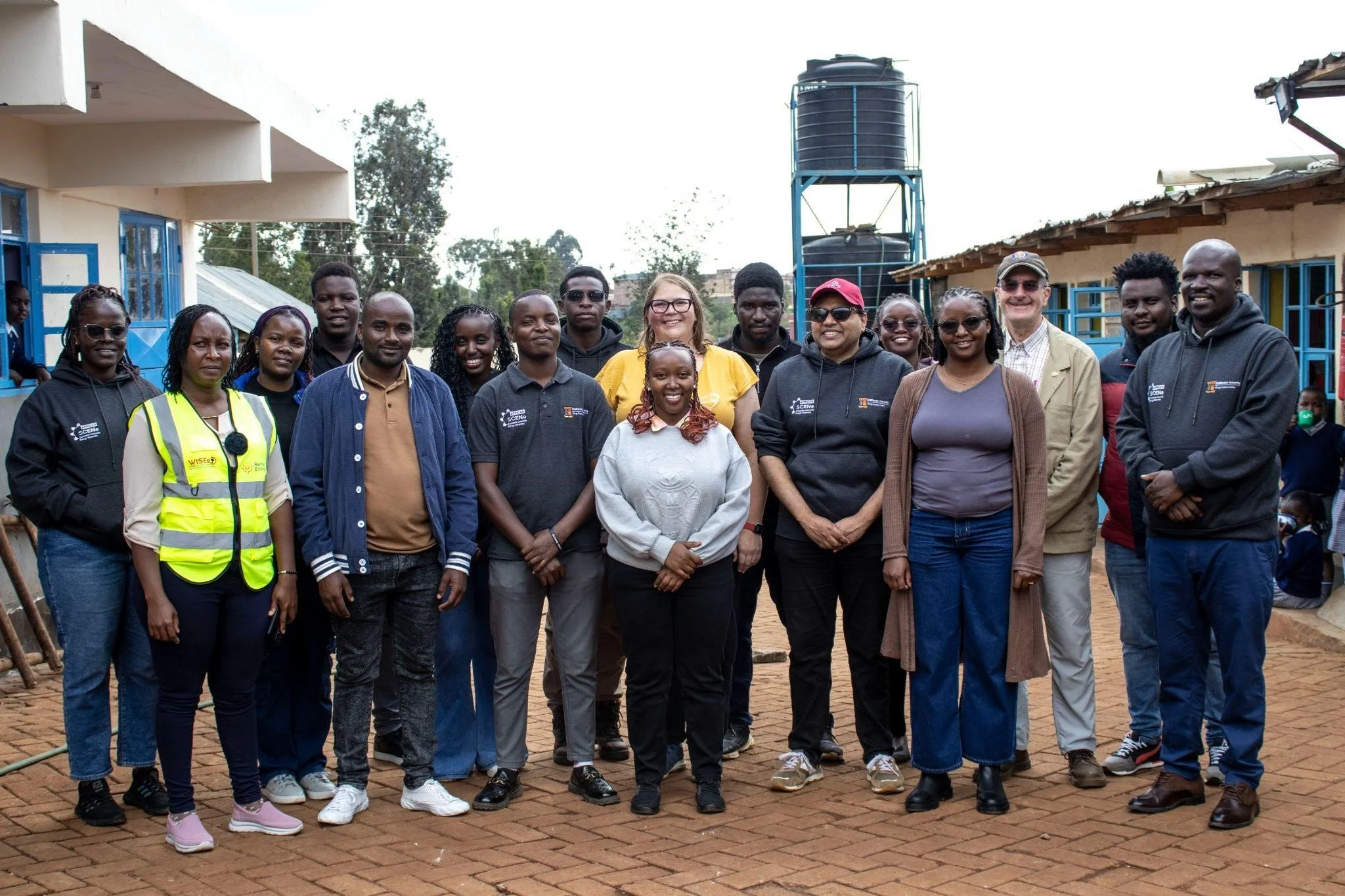
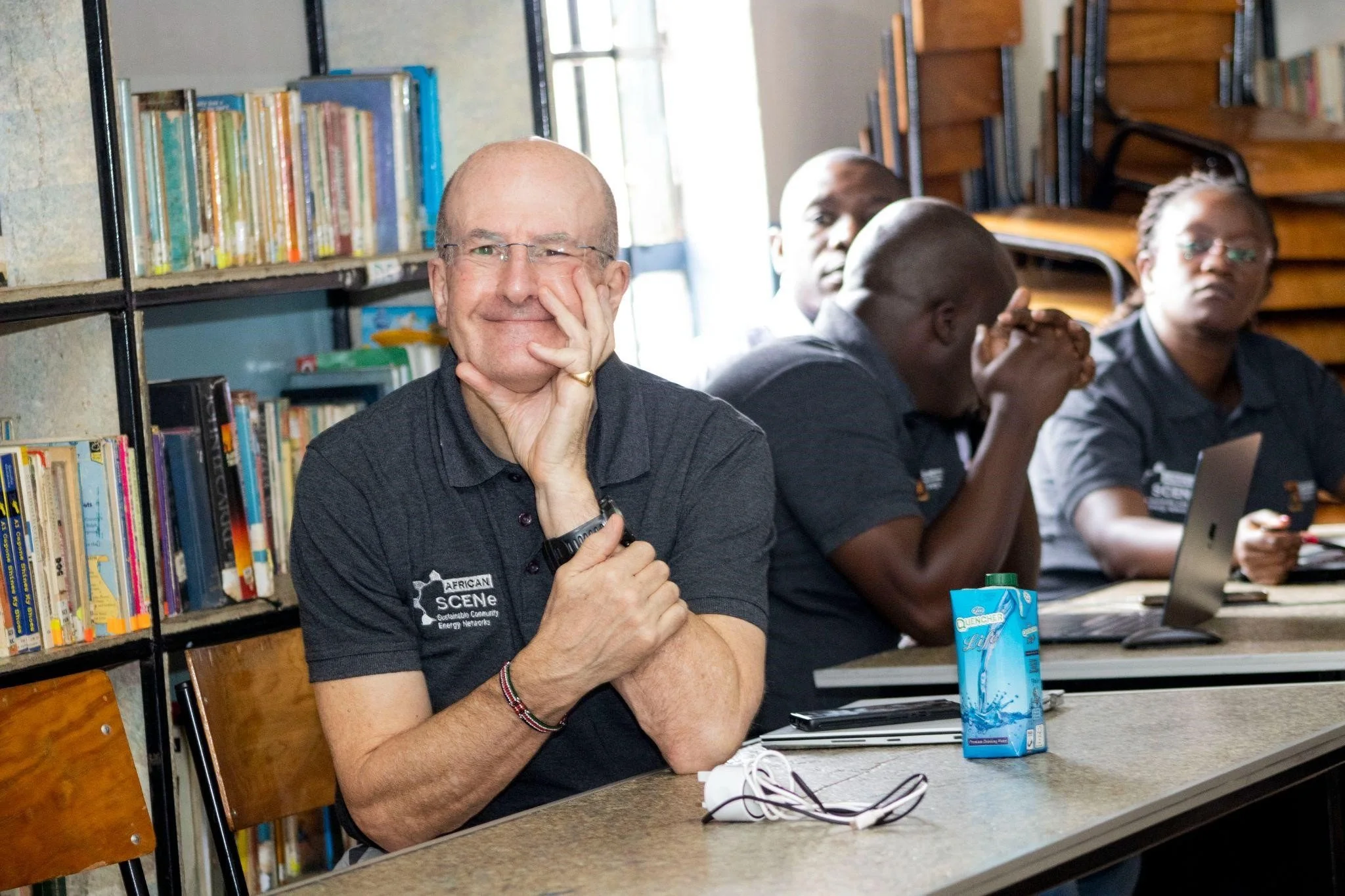
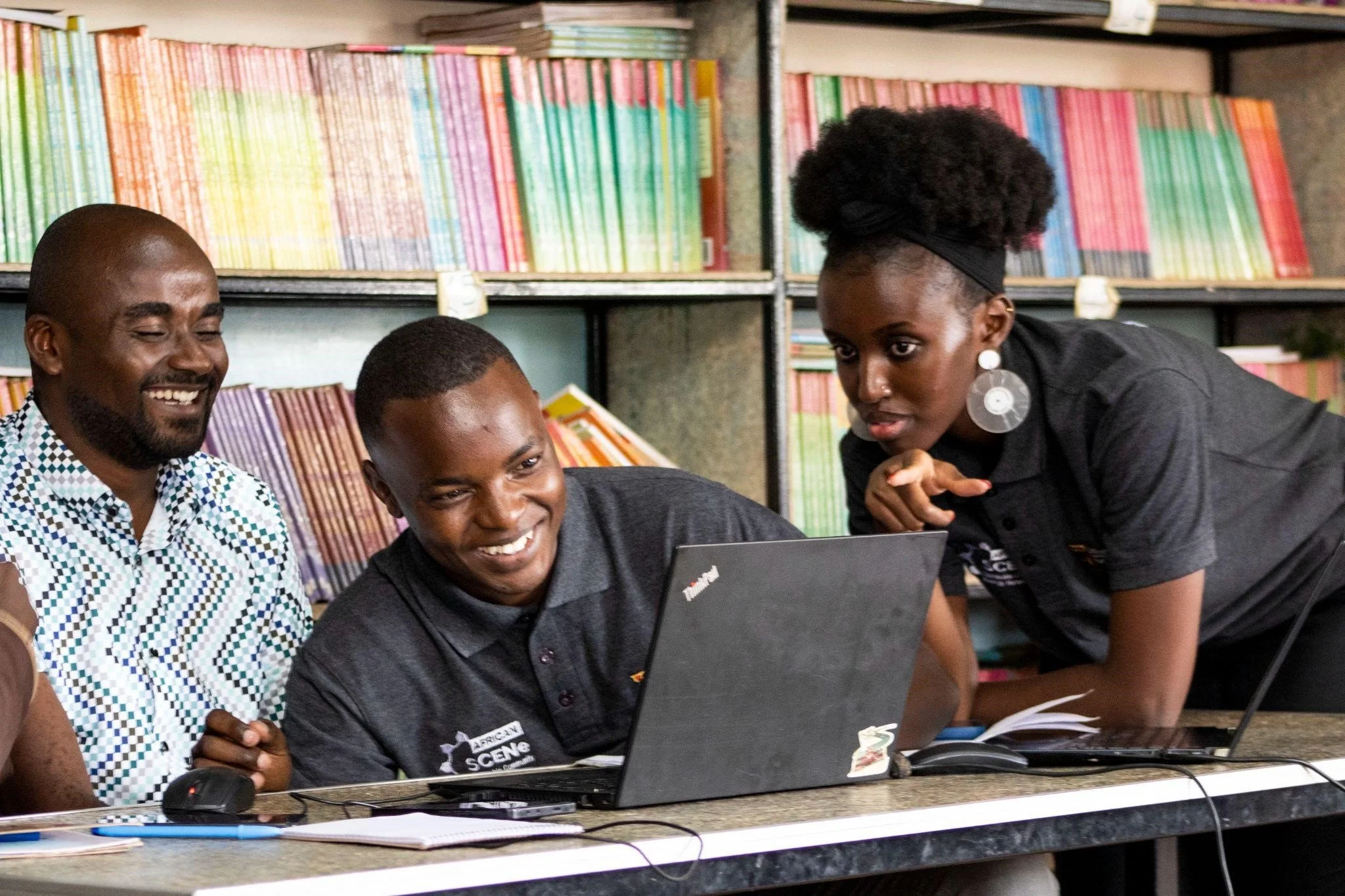
PART OF THE AFRICAN SCENE PROJECT TEAM VISITING A PROSPERITY SCHOOL IN KANGEMI, NAIROBI
You can read more about the African SCENe (Sustainable Community Energy Networks) project here.
So every time you have a project you're using your knowledge to see how a community can generate energy, how much that costs, and how you can ensure that this is both economically viable and socially useful?
Yes, and carbon saving as well. It’s problem solving at the end of the day. I'm a physicist by training, not an engineer, but problem solving is what it's all about. You have to go down lots of little rabbit holes and join the dots, and then you need to get the community involved to amend your ideas and over several months you create a model together that's viable and has community support.
So these business models are co-created with the community?
One of the stories I've told many times is about the co-creation sessions we were doing at Trent Basin. They started off as monthly meetings but because we were falling behind in the planning we upped it to every week. I started feeling bad about asking so much of people’s time and suggested having four planning groups, with everyone being in one group so that they only needed to turn up once a month; to which everyone agreed. When I arrived the following week to my amazement everybody was there. And when I asked why they said ‘because we enjoy it, and we're getting to know each other. We’re building a new community and the only way we've come to know each other is by attending these sessions’.
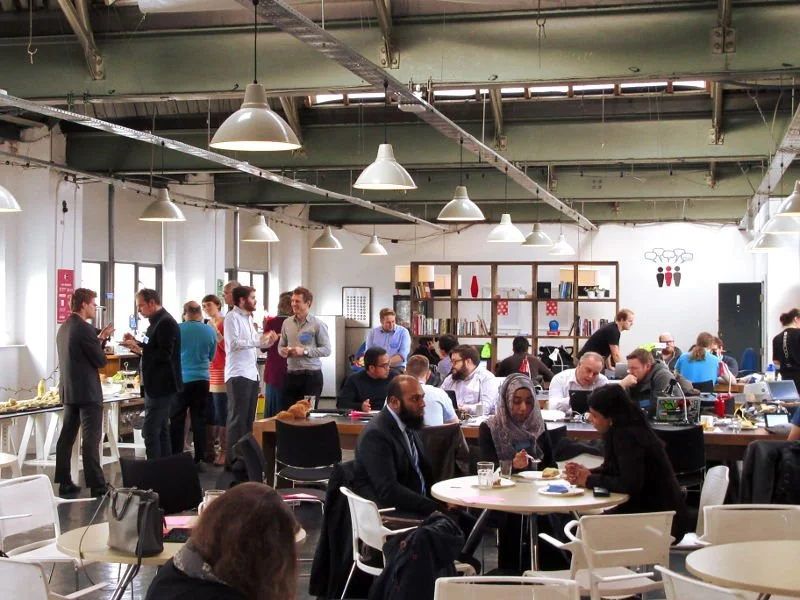
And you have a relationship with the Meadows?
Yes, based around the idea of the WiseGrid. It’s probably helpful to understand that the UK's net zero strategy has basically been an electrification strategy. It's about moving cars from petrol to electric vehicles. It's moving heating from gas boilers to heat pumps. That is 80% of the strategy and everything else is a little bit niche. But in order to achieve this you're going to have to stress the grid a lot more, because instead of just having lighting and electrical appliances drawing power through the grid, you're now going to be using it for transport and heating as well.
Depending on the age of homes, amongst other things, that's going to double or triple the amount of energy required on that grid which means you would have to dig up the roads and put in a new bigger grid for that to work. The costs would be huge, and you’d end up affecting the world price of copper. This idea – of what we call reinforcement – has been around for twenty years and was known as ‘Rewiring Britain’. But when you do the sums it just doesn’t make sense and would be incredibly time consuming.
However, because we’ve had the privatisation of all the energy assets – the cables and pylons and substations that are required to distribute the power – the shareholders who own those assets want to make as much money as they can. And their business models, the grid operators' business models, is all about asset management - loading their balance sheets with more and more assets that we end up having to pay for in our bills. So, you can see why those private companies are starting to say that we need to increase the infrastructure as the safest way to approach net zero. And with climate change and blackouts on grids around the world becoming more prominent, governments have become more nervous.
So, alongside the work that is now taking place to upgrade the grid, people have been thinking about creative ways to get more out of the existing grid to counter that argument. Which is where the work in the Meadows with Mozes (Meadows Ozone Energy Services) comes in.
We've done feasibility studies to see how we can avoid a lot of the grid reinforcement by making sure we use the new energy assets that are appearing. If you've got more solar PV the less you have to import from wind farms. And doubling the amount of wind farms we have does stress the transmission network as well as the local wires. Since the new government’s Local Power Plan policy was published the network companies are showing positive signs of engaging.
So the transmission of energy is in itself a challenge?
Yes. Energy is difficult to store. It’s been said that the UK could become the Saudi Arabia of wind and we could produce that energy. But distributing it all is a real challenge and so you need to look at how you can possibly avoid the transmission network. If you've got an electric vehicle that's plugged in ready to charge overnight when energy is plentiful and cheap, you could use the battery from that electric vehicle to provide energy when it’s more expensive. So rather than having the grid provide energy you are doing it locally. The battery becomes a valuable asset that can earn money offsetting the higher cost of an electric car.
And exactly the same is true for heat pumps. Heat pumps, unlike boilers, don't create their heat when it's needed. They create it in advance in a much slower way. They can use cheap overnight electricity and middle-of-the-day solar energy to heat tanks of water, which you can store and use later. So, you can always make sure that you never run your heating system in the peak period.
This all means that when energy is plentiful, when there is less strain on the grid, and when it is cheaper, people can be charging their cars and charging their heat pump tanks. I'm on a tariff where I sometimes get paid to charge my car because there's so much excess energy on the grid that it's cheaper to incentivise people to use that energy than it is to ask the wind farms to curtail generation.
It is complicated!
Yes. For some time now people have been referring to ‘Smart Technology’ and ‘Smart Grids’ when thinking about achievable and affordable ways to move to a more renewable and sustainable energy policy. Basically, that is using digital technology, sensors, and two-way communication to make sure that energy supply and demand are as efficient as possible, as well as allowing people to become energy producers. What we are looking to do is to take this a step further by considering the social potential of this technology and what we believe in the Meadows is that wisdom comes before smartness
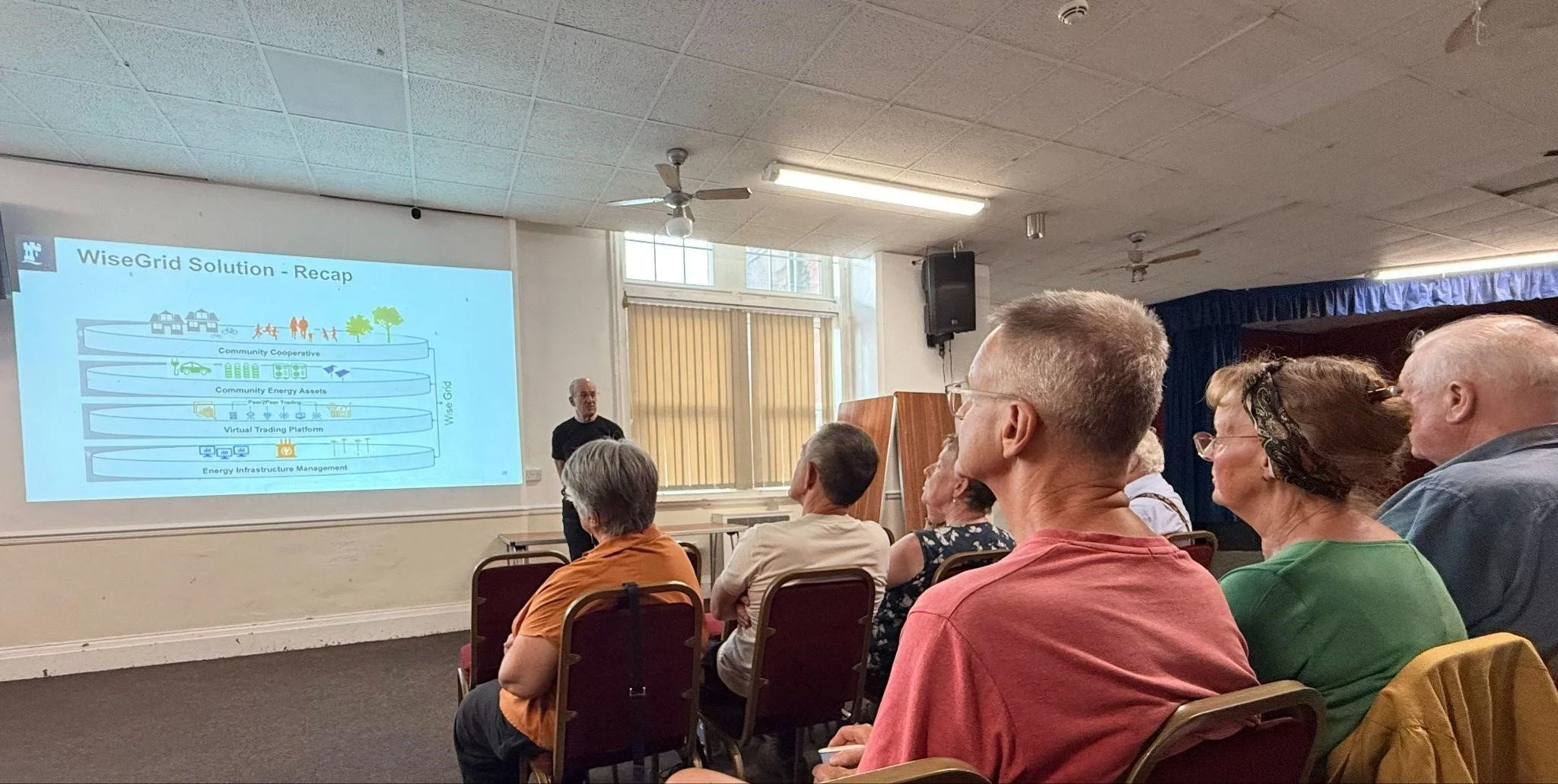
PRESENTATION OF FEASIBILITY RESULTS TO THE MEADOWS COMMUNITY
If we act together as a community we can help people to buy their electric cars and heat pumps in stages, so we are always supporting rather than stressing the grid. We can create relationships with financiers to get good rates on cheap loans to pay for the car, the solar PV panels, the heat pumps, and which can be paid off over time. The more of these assets we have in one area, and the more self-supporting they are, the longer they delay any need for grid reinforcement. And they also become ways for people to earn revenue, rather than everybody's energy bills going up to pay for reinforcing the grid. People can operate in different ways at different speeds. It’s about mutual co-operation so that everybody gets cheaper energy, and everybody protects their community with more sustainable technology.
That’s what the world used to be like. Back in the mediaeval period collecting firewood was a community activity and everybody knew where their energy came from. Since the Second World War we've forgotten that; energy is available at the flick of a switch which doesn’t require us to think what's behind that switch. By working as a community in cooperative ways, we can democratise access to energy as well as solve climate change. That's what WiseGrid is all about.
How is it managed, given the fact there are so many moving parts and it’s a collective effort?
In the Meadows they've already done lots of house-to-house energy studies. The different building archetypes, the location of heat pumps, electric vehicles, and solar panels is all known. There's already a community committee and community energy company. It’s about having regular meetings with very clear governance where anybody is allowed to join and give their points of view. That's how trust is built and the best solutions are arrived at.
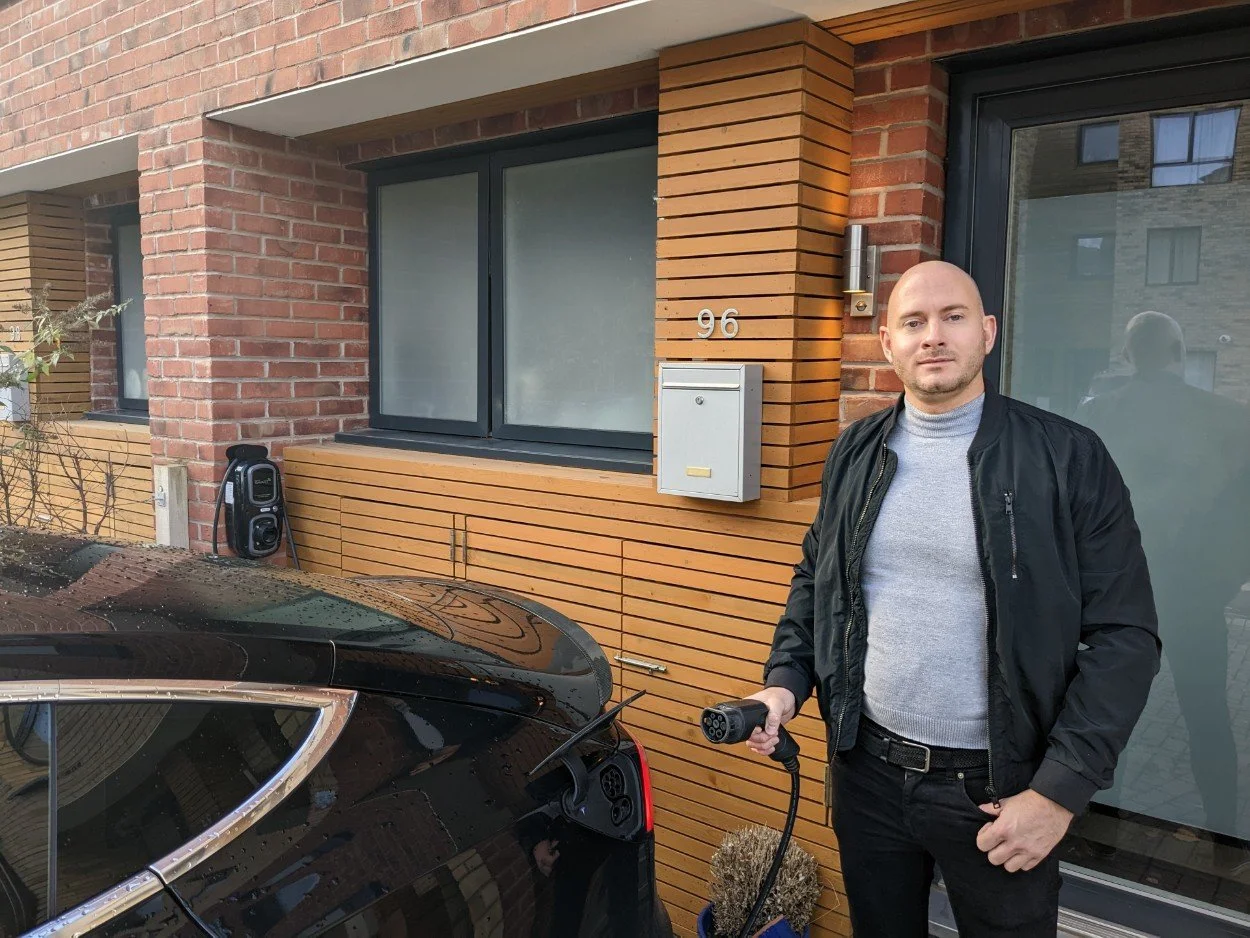
Take electric car batteries for instance. We're not in favour of every home having its own battery because that could be doubling up on asset costs. Electric vehicles are brilliant. There are very few moving parts and the running costs are very low; but the upfront cost is currently high. But if you can create a financial arrangement that helps you with those costs, as well as creating a system when people can earn revenues by using the battery when it's stationary - and a typical car is stationary for 23 and a half hours a day. It’s the same with heat pumps and thermal stores, which are basically a heat battery for your home. Next door's excess energy can be used to power your heat pumps that then fill their hot water cylinders for later use.
We can recommend how to match up people who've got excess power with those who need power in a way where they both win. At the moment, if you export to the grid you get quite a small payment for that energy because the energy companies assume that rather than being used by your next-door neighbour it could be used in John O'Groats. The ‘use of system’ charges we all pay are composed of different elements of the grid from transmission to distribution. Currently we pay them all even if we only use the local distribution grid and go nowhere near the national transmission lines.
The transmission network has been likened to the motorways, carrying vehicles (electricity) at high speed (high voltage) across the country. This is the network of big pylons and overhead lines you see around the country. The local distribution networks can be thought of as the local roads, connecting motorways with communities to help vehicles complete their journey. These are the smaller pylons and underground cables carrying lower voltage lines.
If you work as a cooperative, you can create what are known as a peer-to-peer agreements. For instance, if your excess PV is being used to charge a neighbour’s car the person receiving the energy can get a discount on the grid price and the person exporting the energy can get an increase on the current export rate.
Is this idea of ‘peer to peer’ energy usage developing on a national level?
There is a new regulation with a very exciting title called P441, that is now being recommended and has been mentioned in the recent government policy, the Local Power Plan. This would mean you could enter into a local arrangement with a neighbour and pay them a monthly fee for whatever kilowatt hours moves between you. It would still be an export and an import over the public network, but you would agree the half hours when you wanted the trades to happen and those would be recorded in a database. There are trading platforms already in existence which allow local trades to happen; it's all auditable. Ofgem have also agreed that you would only need to pay the local use of system charge for the network.
Ofgem are the energy regulator for Great Britain. They say: ‘We work to protect energy consumers, especially vulnerable people, by ensuring they are treated fairly and benefit from a cleaner, greener environment’.
A key part of our work would be setting up dating between neighbours. You've got excess energy and you need energy. And then agreeing prices so people are getting a fair deal. It’ll all be very much out in the open to build confidence so that people can join in with the idea. And what that does is increases the value of those sustainable energy assets so that you can break even on your solar panels and electric car quicker. That in turn means a whole new segment of the market will start buying these technologies. And as the market volume grows, the economies of scale grow and prices come down. We want to be one of the first areas in the country to prove this WiseGrid model works and we're seeking funding for that at the moment.
It sounds incredibly complicated because the energy markets are so incredibly complicated. But the simple concept is that it is better if neighbours can match when they generate energy and when they have demand. It then comes down to creating an accounting system to track who owes what by generator, supplier, and user. Not only do people save money but there's less stress on the grid.
Is the idea of community energy being promoted on a national level?
It is gradually. We've had several years of frustration where we were returning to the traditional model of just reinforcing the grid everywhere using public money, to a moment where Ed Miliband's new policy – the Local Power Plan I mentioned – promotes community energy.
Traditionally the idea of community energy was where people clubbed together to fund a wind turbine or a solar farm and earn some revenues from that. It’s a good way of getting local energy into the big energy system in a renewable way, and rewarding local investors. But that's still part of the old-fashioned model. The type of community energy we're engaged in is about cooperative models between residential houses and housing associations, of looking at the collaborative social potential of local smart energy systems, which there is an increasing government interest in. We want to be pioneers in The Meadows because it has a unique history of being several steps ahead with its use of renewable technology and community groups.
I went to an event recently where the distribution company for this area National Grid, (which is now known as NGED), are putting together their business plans, like all the other distribution network operators, for the next five-year period. These are where Ofgem will decide on their calls to reinforce their grid and charge the public for that. NGED have now recognised the importance of flexibility, the technical word for smoothing out the peaks and troughs of energy. Which means making sure neighbours can do peer-to-peer trading.
That flexibility is worth a lot. The more diverse your community, in terms of its technology and its community profile, the more flexibility there is and the less grid reinforcement you need. Areas that have light industry are really good because they have an energy need that's bigger in the day in amongst residencies who have a need that's bigger in the evening. You are looking at all of the peaks in energy use and finding a way to line those up so they become a flat line across the day; which means you’ve optimised what you’re getting from the grid. We think we're pushing at a door that's starting to open.
So in the future will you have a wise or smart grid officer working for a local council to see where these community projects could happen?
We would rather it was bottom up. And there are enough people now who are interested in net zero and low carbon technologies to form their own communities. Hopefully, if we can pioneer from The Meadows perspective, we will create a whole set of tools that will be available for others to copy so they can start to follow a plan. Our recommendation both centrally and to the grid operators is that we ought to have maybe at least ten pioneering communities around the country doing this as soon as possible. Don't tell them what to do, just let them get on with it. Sometimes we'll have to do things differently because there's a reason for it. Other times we might go down a blind alley. But quite quickly you can establish best practice and create a set of tools that allow communities to join in and not make the same mistakes we made.
When it comes to local authorities they could look at how to optimise the amount of renewable generation and enter into joint ventures with the network operators. For instance car parks could have solar canopies, so the cars stay cool underneath and we're generating electricity to recharge those cars. Public buildings with roof space should have solar PV to give local authorities a long-term revenue stream, which they all desperately need at the moment.
But are there any projects that have really sprung up from the grassroots?
There are lots around the country; lots of local groups that have done various versions of community energy. Staying bottom up is important because it's more creative. We understand the diversity of different needs. There will come a day when we have proven to the district network operators, to Ofgem, to the government, that this does work. And we predict this could save about 60% of reinforcement costs. That's a massive sum of money.
There will still be some need for reinforcement for different circumstances, but once we've got to the stage where we've proved it does work, we've learnt best practice, maybe then it starts to become formalised and eventually the local authority takes it over and there's a standard way of doing it. The police service started like that after all. I have no problem with having some top-down component, but only once we know what we're doing. If you try and template things too soon, you stifle innovation. At the moment, community energy is so diverse. There isn't a single definition for community energy which makes it tricky; but there's certainly enough interest to start groups.
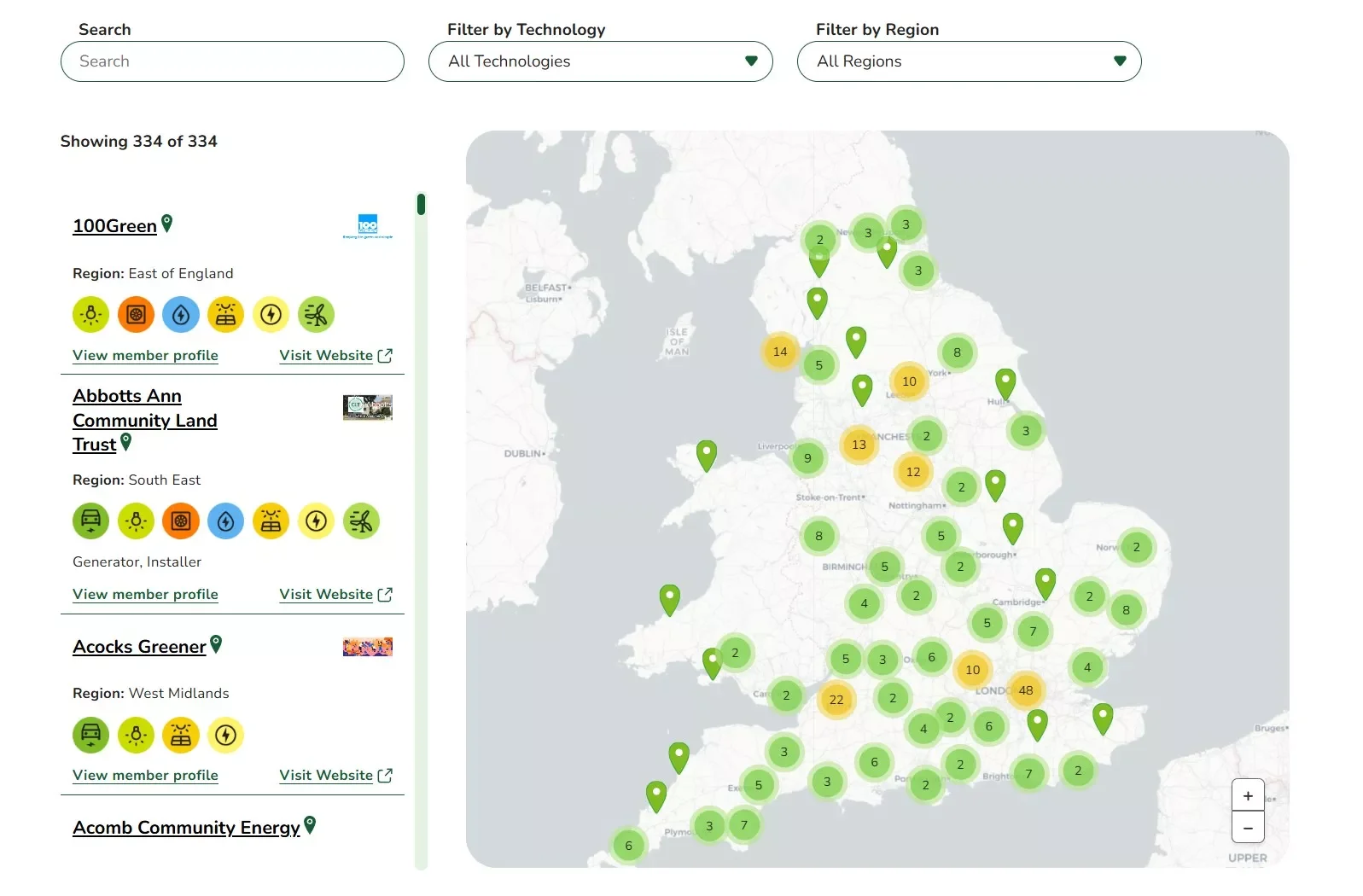
The other thing that's important to say is you don't need everybody to join in at once. You could literally start off with 50 homes and then once neighbours start to ask about how the solar panels are working, and how much money is being saved, those over the fence conversations will spread the word. Then it starts to grow virally and people join in a willing fashion. The district network operators would rather it happen that way. Their biggest fear is that suddenly owning an electric car becomes so fashionable that everybody does it. Because if a whole street bought electric cars and plugged them all in at the same time, the grid would fail.
We need to do this incrementally with a cocktail of solar PV panels, heat pumps, and electric cars that support each other. If one neighbour has an electric car, whilst the other neighbour has a heat pump, the electric car can support the heat pump when it needs to operate in peak times by using its battery. We can organise communities to avoid stressing the grid by having a planned rollout of all of these energy assets.
But however local it still needs a real business model around it - which is where you come in. So how does that work? How does a potential project engage your services? I presume you need to be paid for your work!
At the moment the WiseGrid model is financed through Nottingham City Council's community energy fund which is part of a national fund that is administered regionally. And whilst there's a technical element to the projects, fundamentally they are social projects. We need to learn how we get everybody in the community linked into them. But the reassuring thing is that the energy assets that we need are coming down in price as economies of scale kick in. The familiarity of their use in communities is becoming more known and trusted. The next generation just take it for granted; they have less resistance to these ideas. And from what I've experienced so far when communities have met together they really enjoy problem solving, and coming up with ideas.
Is there any kind of sense in which this is not being universally accepted across the political spectrum?
Definitely. One of Reform’s big money saving ideas is to stop doing renewable green stuff, which disappointingly the Conservatives have now joined in with despite them having led on various projects and schemes. It's an easy thing to throw stones at, but it makes so much sense economically and socially. Let's use America as an example. Texas, one of the most Trump supporting states, is accelerating its renewable programmes because they know it makes money and it's helping the state. The genie is out of the bottle and it’s not going back in. And the more disrupted the world becomes, the more self-reliant we need to be.
And people are looking for all kinds of ways to build community, so maybe energy will be the way we do it.
Well, I received a phone call the other day asking if I was the person that builds communities? I'm quite proud of that. If energy helps glue communities together, why not?