
Nick Girkin - Agriculture & Sustainability
Interview with Nick Girkin, written by Andy Barrett
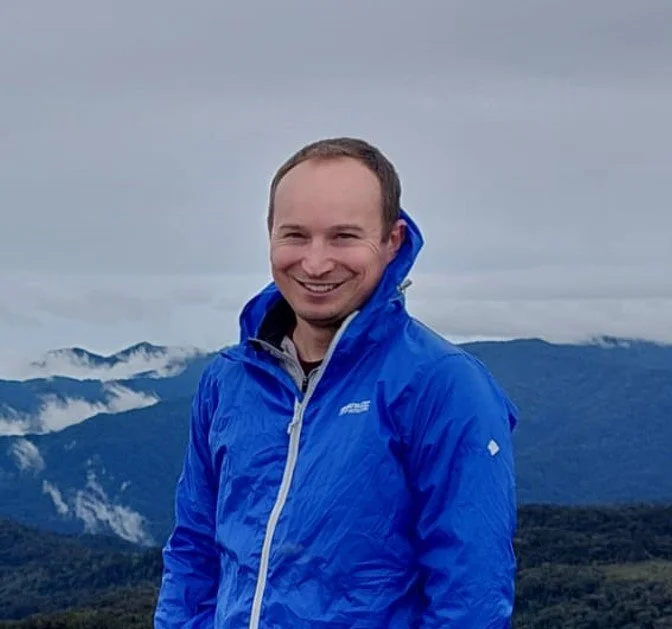
With agriculture being so important to the way we confront challenges around sustainability, as well as being an area that most keenly feels the impact of climate change, Andy Barrett went to speak to Dr. Nick Girkin, Associate Professor in Environmental Science and a director of the Centre for Sustainable Agricultural Systems at the University of Nottingham. This was set up as a cross-university institution in 2024 to help university researchers in better engaging with businesses working in the agricultural sector on ‘sector-wide’ challenges. As with many of these articles there are a number of links in the article, which will help explain some of the issues and challenges that we discussed – so do take the time to have a look.
Can we jump straight in with the kind of issues that the Centre is helping to confront?
I'm sure you're aware that agriculture is facing a lot of challenges. These range from its contributions to global greenhouse gas emissions – which globally is around 25% to 30% of carbon dioxide equivalent emissions – to wider challenges around soil degradation, climate impacts on yields, pests and diseases, and emerging challenges around things like microplastics contamination in soil. And whilst these are all individual sustainability challenges they are often interconnected.
The only way you can achieve the changes that are needed to confront these challenges is through working directly with farmers and the businesses that are working right across the supply and value chains. That means everything from a relatively small farming business to people like plant breeders, retailers, even commodities traders who deal in agricultural products and want to understand the scale of emissions associated with their supply chain.
And what led you to this work?
I started off as a tropical ecologist studying methane dynamics in peatlands in Panama. And from there I expanded my interest into greenhouse gas monitoring more broadly and how we can use different ways to measure it. Increasingly I became interested in specific agricultural challenges and after looking at emissions associated with palm oil production in Southeast Asia, I worked on other tropical commodity crops like tea, coffee, and cacao. Globally many of the challenges we face are fairly similar across different geographies. (You can read some of Nick’s papers here).
And what are these challenges?
How we can improve soil health to maintain yields. How we can reduce agrochemical inputs to either reduce costs, maintain yields, or provide human or biodiversity benefits. How we can better manage pest and diseases. There are lots of overlaps between these and in the context of the climate there are two main challenges. One is around temperature change, particularly in the tropics where rising temperatures are really pushing crops to the limits of what they can reliably produce. And then there is precipitation and changes in the frequency of drought, extreme rainfall, and often both in relatively confined geographic areas. This means you have to look at adapting current agricultural systems.
How do you do that?
You look at growing new crops in the same area or how you can better manage the current crops, maybe by introducing new varieties. This might require change at a large scale, so in the tropics looking at more agroforestry-based systems (the integration of trees into the farming system, while maintaining or enhancing the farm’s main agricultural output). But with all of these the main challenge is the same - how do you work with farmers to ensure that new practises are adopted? And a lot of the time that's around the availability of resources to help them adapt: funding, equipment, infrastructure.
What are the challenges around precipitation and drought in the UK?
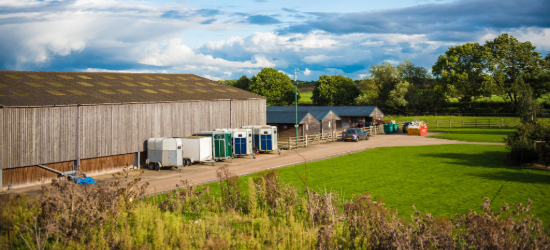
Farming has always been controlled by the weather more than any other industry, because if you don't have the right weather your crops won't grow. We’re already seeing increases in flooding, changes in temperature, changes in the predictability of precipitation, and there have been various national scale projects looking at longer term climatic risks and how these will impact agriculture.
We are looking at what farmers can do to maintain yields, and how can they get reliable sources of information to help with this, rather than us recommending any one specific management intervention or product. Then they have to be able to attract the level of investment needed to adopt these changes. And of course, tied into the importance of agriculture as a source of food production, is the wider context around UK commitments for addressing carbon emissions from the agricultural sector. So, at the same time as you're trying to manage land for food production under a changing climate, you're also managing land in the context of, for example, maximising biodiversity benefits or soil-carbon sequestration. There are many more trade-offs for food production than farmers were having to deal with 10 or 20 years ago.
Individual crops always have their own levels of susceptibility to pest and disease, and we are seeing an increase in these associated with climatic change and international trade networks. This is obviously a major challenge and there is already a lot of knowledge around how things like diversified rotations can help. So instead of focussing primarily on a couple of specific cereal crops, farmers might grow multiple varieties of cereal crops in the same field, or have a diversified rotation of a longer period. These are fairly consistently being shown to provide multiple benefits to farmers, but there is often a reluctance from farmers to change.
Why?
Because farming is largely about risk management. If you have a set of practises that have worked for a long time and are underpinning your entire livelihood it makes perfect sense that you're going to be hesitant about trying something new. Especially if it’s going against agronomic advice that's been provided for decades; even though what we are suggesting is often harking back to more traditional practises, at least in terms of more diversified cropping systems.
When a farmer switches to a new crop they need to have a market for it, so retailers and manufacturers need to have products they can develop from that crop. The knock-on effects of changing a crop that everyone is used to have to be carefully thought through; which means you need a level of societal change rather than just agricultural change. We've been working on a project focused on linseed, which is increasingly being used as an alternative to oilseed rape, which is a crop that's being heavily affected by pest and disease. There are opportunities for, and discussion about, growing more oats instead of barley, wheat, and other cereals. But the challenge is always ‘what is the consumer actually interested in?’
I think any major change in the crops that are being produced here will be a gradual process, in the same way a few decades ago people wouldn't expect to be eating meat multiple times a week. Over time dietary preferences have changed as food has become cheaper, and we're probably looking at a situation where that is going to change, and it’s going to use up more and more of our budgets. That means people are going to be more interested in picking out things that they really like and are probably nutritionally good for them.
I think it’s likely that we're going to see a broader shift back towards seasonality, and perhaps locally sourced food. But it’s not necessarily better for the environment to eat locally sourced rather than imported foods, it all depends on how the food you are eating is grown and managed. And all of this is connected to a wider UK food security narrative in that we do not grow all the food we need to survive. It's a very complex, messy picture.
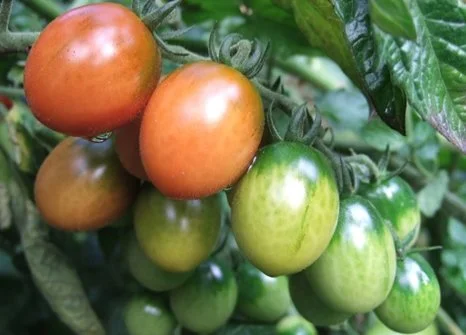
We’ve become used to having tomatoes available all year round.
Exactly. And much of the food supply is following the just in time system, which can create problems when you have a supply chain disruption. Supply chains are now global, so if you have a crop failure in one region they can be sourced from another region. But increasingly we will see multiple shocks occurring in multiple regions.
The website for the centre mentions three ‘expertise hubs’ – regenerative farming, climate smart crops and digital agriculture. Could you say a little bit about each of those?
Regenerative farming is about predominantly soil-based management practises, so looking at approaches that reduce the disturbance of soil, which has been shown to have fairly consistent benefits for farmers in the medium to longer term. As part of this there is a growing market for bio-fertilisers (organic materials that contain beneficial microorganisms, such as bacteria fungi, and algae), that are different to more conventional urea or ammonium nitrate-based fertilisers. And many of these alternative nitrogen sources can be sourced from waste products. So we undertake a lot of projects, often with quite large farmer networks, to really understand the benefits and trade-offs of these types of innovations.
We also need to understand how crops are going to grow under future climates which is the work on climate smart crops. That can be, as we’ve already talked about, looking at underutilised crops which might perform better under future climate conditions or different types of stress. Or it might be looking at how we can use selective breeding to understand how current crops, or specific varieties of current crops, can be selected in order to be more resistant to drought or temperature stress.
And then our third area is around digital technology. For example, the University of Nottingham is very lucky in terms of the resources that it has such as equipment that allows us to non-destructively visualise how the roots of different crops are interacting with the soil. At large spatial scales we can use geographical information and remote sensing systems (technologies that collect and analyse data about the Earth's surface or atmosphere from a distance, using sensors on satellites, aircraft, or drones). These types of technology allow us to undertake projects from imaging how a new product is impacting root dynamics through to looking at monitoring deforestation at national scales.
What part does genetic modification play in confronting the challenges you’ve talked about?
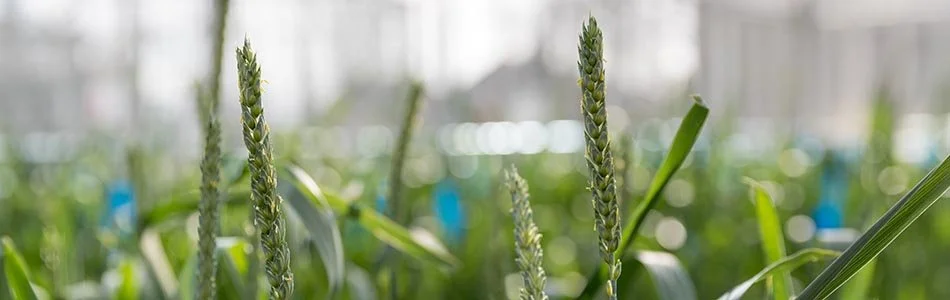
I think it's more widely accepted now than in the early 2000s when there were national scale protests. But most of the projects the centre is undertaking are working with existing agricultural systems. The pipeline from developing a new crop variety to seeing it grown in the field can be very long and we already need to be looking at how these crops are going to develop under future climates. That means we're going to need to accelerate that pipeline process and gene editing is a really powerful tool for accelerating breeding programmes.
But there's also a huge opportunity from looking at existing natural variation for many crops, and in looking at those underutilised crops that might have a naturally greater resistance to a particular pest or disease or temperature. The thing to remember any intervention, whether it involves GM or not, is that farmers are not going to be interested in adopting something that hasn’t been rigorously tested and trialled at scale.
Here is the Food Standards agency information on genetically modified foods.
You’ve talked a lot about crops, what about livestock farming?
The centre has over 50 researchers across the university associated with it and many of these work on livestock. We have a vet school at the Sutton Bonnington campus, an Animal Science Division, and a Centre for Dairy Science Innovation, which has a large dairy herd. There are research projects around greenhouse gas mitigation, better storage of slurry, the impacts of additives to cattle diets. We’ve also had a large grant to test the impacts of various new biofertilizer products on grass production for the UK dairy sector, to quantify how we can maintain soil health and crop production for cattle fodder while at the same time reducing the emissions footprint for the sector. (You can read about that here). So, we have lots of projects that combine the two, crops and livestock.
Are there any projects that are happening regionally or in the city that the centre's involved in?
We’re often undertaking trials with various partners on the Sutton Bonington farm, and are currently trialling a new product called Sea2Soil based on fish hydrolysate. It’s a waste product from the fishery sector which is incredibly high in nitrogen and other nutrients and for the last 18 months, we've been looking at the impacts of this on crop production and greenhouse gas emissions. The work we've done so far is showing that it provides really substantial benefits compared to conventional fertilisers in terms of soil microbiology and earthworm populations, as well as benefits in crop production whilst reducing the amount of nitrogen being applied.
We’ve also got a couple of PhD projects funded by the Processors and Growers Research Organisation who are looking at the benefits of incorporating legumes into agricultural rotation, which is becoming increasingly popular. That involves studying impacts on soil structure, the production and emission of greenhouse gases, impacts on pests and diseases. We are working in West Africa looking at sustainable cocoa production; and on a project based in the UK and with field sites in Mexico working on sustainable agave production.
We have two projects working in the Fens, one of which is co-funded by Sainsbury's and is looking at producing a more accurate map of carbon stocks and carbon losses. Whilst the Fens are really important for UK nutritional security and employment in the local economy, they’re a major source of agricultural greenhouse gas emissions. So, we need to understand where those carbon hotspots are and how we can better manage them. The other project is with G's, who are a major local and international food producer, looking at ways to mitigate emissions while still supporting crop production. We've also got a project starting in October with Syngenta, which is looking at how we can better control methane emissions from rice.
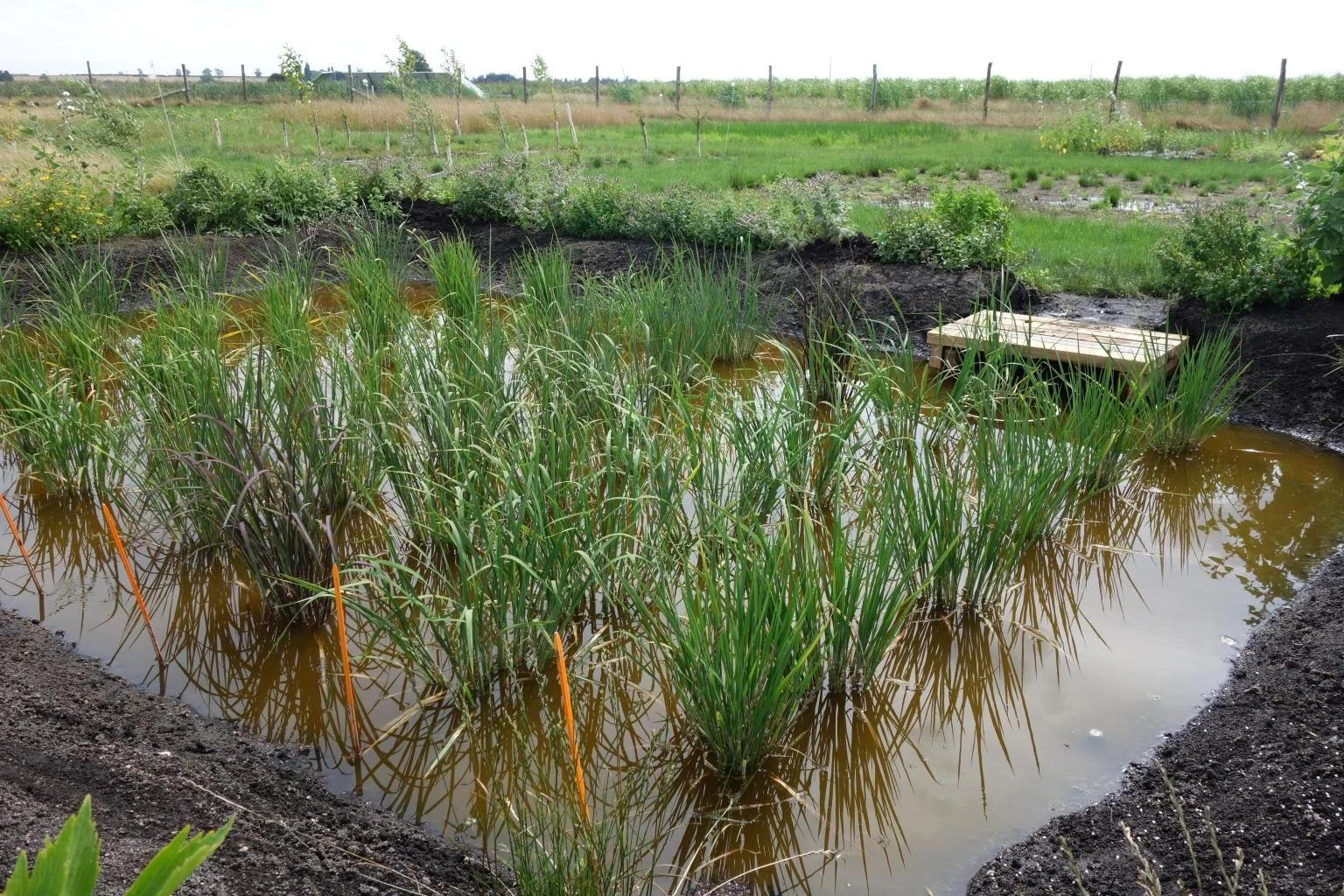
Alongside working on larger scale industry-wide projects are there opportunities for smaller farms or agriculturalists to contact you with an idea for a research proposal?
I would say that we work across many scales and we do get enquiries from farmers asking about a specific problem they have and if we can provide advice. Most farms will have agronomists that they will turn to, so a lot of the work we do is at the next scale up; either the larger farming businesses or consortia based, which is where you apply to organisations like Innovate UK for additional funding. But we’re not focussed on lab-based agriculture, our work is more concerned with measuring and monitoring on farms. Although a lot of our projects are initiated by agribusinesses they’re about working with farmers to understand how, when, where, and why different interventions are going to work.
Is farming becoming more difficult?
It’s definitely facing a lot of challenges, and being at the mercy of changing weather patterns can make it really a really complicated exercise in risk management. And then you have to couple that with a policy landscape that can often change relatively quickly. My experience from working for a fairly long time with farmers is that what they really value is consistency. Any intervention you make, or any change in farming management, has implications for their business and whether they will even still be farming in the following year. So, any interventions need to be adopted slowly with really good information available. You have to provide time and resources for these to happen.
Are the resources available?
There can be, but if you’re asking farmers to adopt new practises you're often looking at capital investments. So, if you're talking about the shift from conventional tillage to reduced or zero tillage you're talking about new equipment, which is incredibly expensive. It is always farmers that have to make this journey, whatever the science says, and they are not going to switch all their fields to a different practise at one point in time unless someone pays them to cover the risk. So, it comes down to relatively small steps like trialling a new product or a new variety within the rotation, which over a longer period can result in quite substantial transformations.
Are you hopeful of the direction of travel?
Very much so, because there are always opportunities for innovation in different ways, shapes, and forms. And farmers have always been innovators in terms of adopting practises; they just need to mitigate the risks to their business. In terms of the centre the number of projects we're taking on has grown rapidly, and I certainly see a growing interest in this kind of work. The impacts of climatic change on concerns around food security are growing, and increasingly you see articles about things like water resources not just in Farmers Weekly or the Farmers Guardian, but in mainstream news.
And what would you most worry about in terms of the changing climate and agriculture?
The key thing is that issues are always coupled together. But I would say, in the UK context, it's probably in water management and ensuring we have water available for farming, because without water you're not going to have crop production. But it's also about balancing the needs of agriculture with the needs of people, and making sure that water resources can move between areas if required. It's a climatic issue, but also an infrastructure one.
In very general terms at a UK scale we're going to see quite substantial changes in precipitation and rainfall, with an increased frequency of extreme rainfall events even if they are of a short duration. These can cause crop failure at a larger scale through things like flash flooding, particularly if it's occurring after a period of drought. It can really cause havoc so it's something where effective monitoring and improved predictive tools are essential. We might also be able to selectively breed crops that are more tolerant to heavy precipitation.
Is rice one of those?
Rice has recently been looked at as a potential future crop in the Fens. There are lots of projects around the UK that are looking at underutilised or minor crops such as quinoa, red wheat, canola. There’s a long list, and a lot of the work going on at the moment is how you can better manage these crops and include them in rotations. But as I said before there is also a need to identify how these crops can be used in the wider market.
Is AI going to push your work forward?
I think it will help around mapping and predictive models, so we might be better able to understand how well a crop is likely to grow in a particular area under future climatic conditions. But there is also automation to consider because there are huge opportunities for this within agriculture, large parts of which use manual labour which feeds into wider concerns like debates around immigration. The average age of UK farmers is relatively high and has been for a long time; it's not a sector which finds it easy to attract the next generation.
Ultimately farmers are being asked to do more and more with the same amount of land, and it's becoming increasingly difficult to manage that land for all these different outcomes that are requited of them. That's where our research can come in: to understand how different interventions can support UK food production and farmers in the most sustainable way possible.