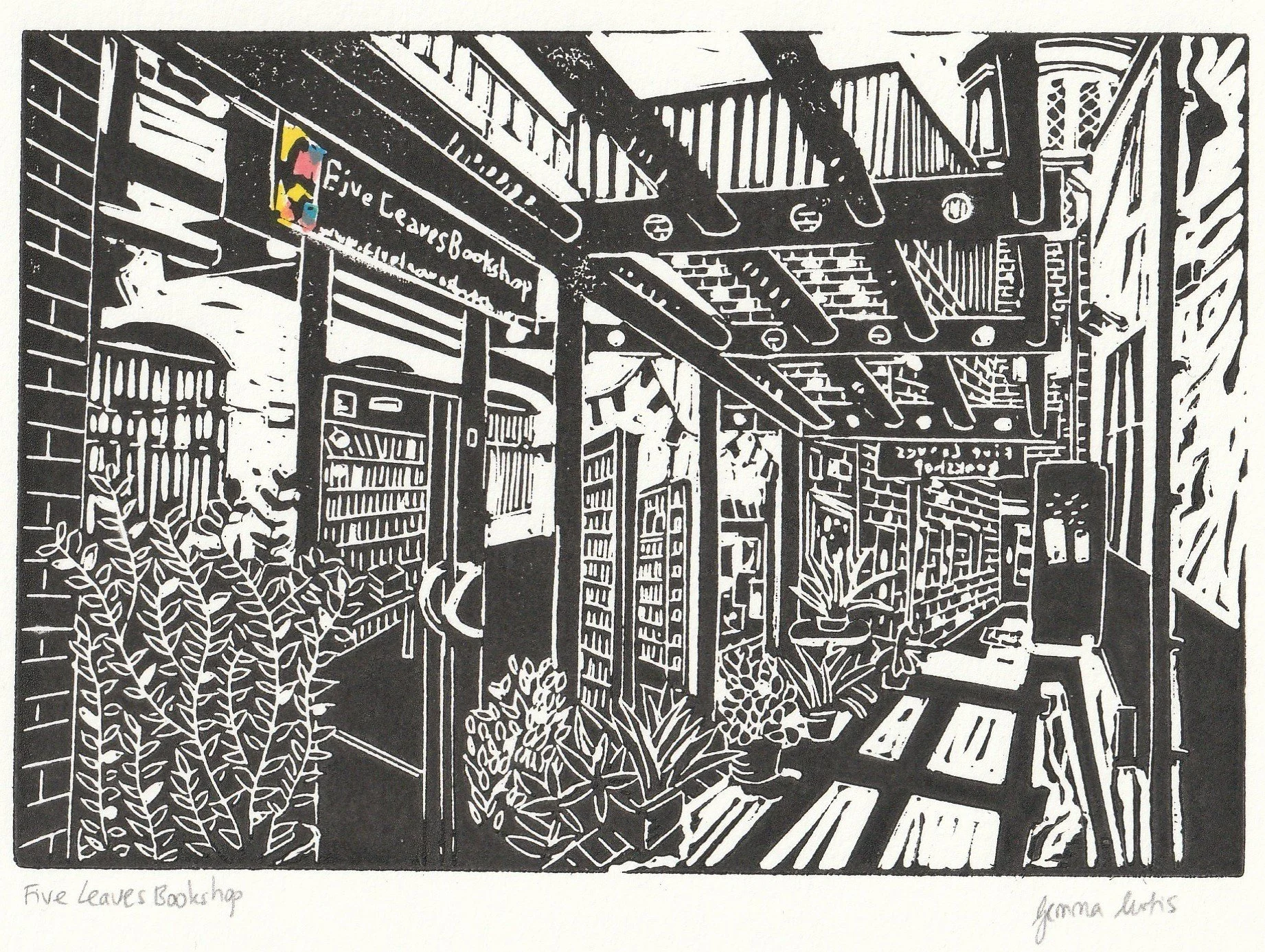
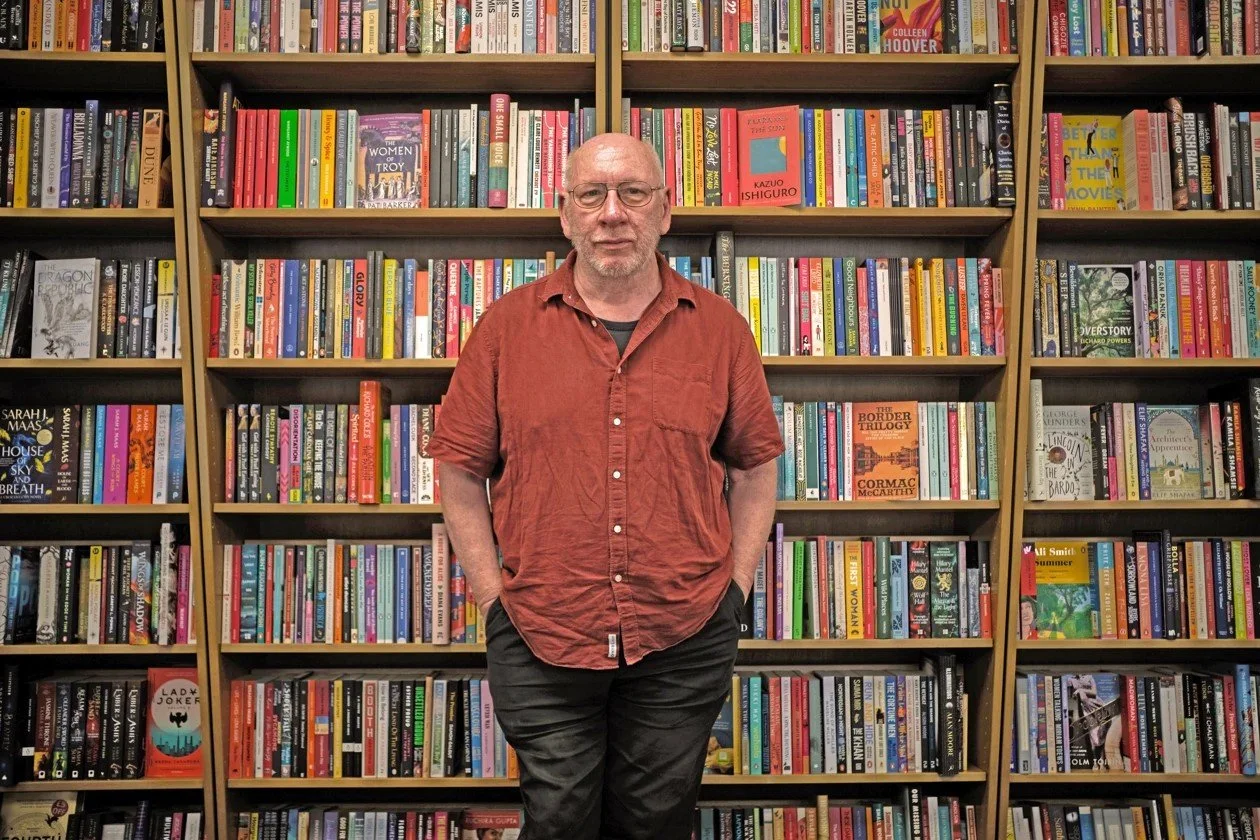
Ross Bradshaw - Five Leaves Bookshop
Interview with Ross Bradshaw, written by Andy Barrett
I visited Five Leaves in Long Row to meet Ross Bradshaw and talk about the changing landscape of environment-based book selling and publishing in the city.
What brought you to Nottingham, Ross?
I used to come to here regularly in the mid-seventies and I always loved it because of Mushroom Bookshop, because of Ouroboros, the collectively-run whole food shop on Mansfield Road, and because at the International Community Centre they had cheap vegetarian meals every Friday night! There was a kind of culture, in the broadest sense, of environmentalism in the city.
There was a paper called Peace News, which had been going since the 1930s and which had changed its focus over the years from being against conscription, then supporting the direct-action movement against nuclear weapons and, later, opposing the Vietnam War, to more environmental concerns with a lot of coverage of communes and alternative living. They wanted to get away from being a London-centred group and moved to Nottingham - by narrowboat! - to set up in Elm Avenue. My partner at the time started working for them and that’s when I arrived.
Could you start by giving me a sense of the radical bookselling scene when you first came to Nottingham? And its connection to environmental activism?
In 1979 I began working at Mushroom Bookshop in Heathcote Street, Hockley; an alternative culture bookshop that had opened in 1972. At the point that I joined it was changing from being a kind of laid back anarchist and green bookshop to a more professional concern, whilst still remaining very politically committed. At that time, and through the early 1980s, the CND movement was growing and those of us at the bookshop were very involved with that. One woman, Chris Cook, went to jail as a result of non-violent activities and three or four of us who worked there were arrested for peaceful protest of nuclear weapons and bases.
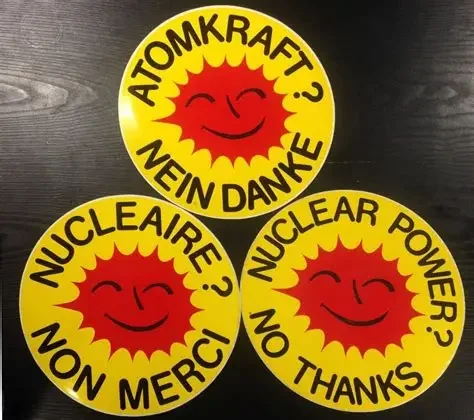
There was quite an overlap between the environmental movement in its broadest sense and the peace movement, not least because of nuclear power. In Scotland, where I’m from, I'd been arrested at Torness trying to stop a nuclear power station being built, which was a major issue in the country. Radical bookshops would be selling those smiley sun badges saying, ‘nuclear power, no thanks’, in every conceivable language. Mushroom Bookshop had a big one on the front door, you walked through it every time you went into the bookshop.
One of the workers there, Kate Marsden, had previously been at the Environmental Information Centre on Hockley. That covered what loosely might be called Friends of the Earth issues, with a focus on recycling, nuclear power, and animal rights. That’s an issue that is just about forgotten now, but was very much part of the culture in the 80s. People would often be at a CND demonstration one weekend and then an animal rights demonstration the next.
Mushroom’s cookery section, which was huge, was entirely vegetarian with a little bit of vegan coming in. We were also selling international vegetarian cookbooks and nobody else was doing that. Rose Elliott was of the main writers that we stocked and we sold lots of Cranks’ cookbooks. Kate and I, with Dennis Bates, published a pamphlet by Sandra Williams called Easy Vegan Cooking which sold in its thousands nationally. Our gardening section was largely organic, with Lawrence Hills being our most sold writer. He came to the shop once, asked if we had anything on organic gardening and was recommended his own books! We hadn’t recognised him.
I think there was a kind of closer link then between radical bookshops and the environmental movement, just as part of the culture in which we sit. Even if we were not directly involved in some of the issues, we would know all the people who were and have a good relationship with them. But at that point environmentalism was based more on a sense of a cataclysmic nuclear-based worry and climate change was really not being talked about. It was more about nuclear energy poisoning the earth through nuclear waste and nuclear war. We were also aware of what was happening in Germany, the growth of a radical green movement with Die Grünen and Petra Kelly and how being green was becoming a much more political statement.
You mentioned the Environmental Information Centre, what happened to that?
It was originally in Hockley, next to Ice Nine, before moving to Mansfield Road where it was called the Rainbow Centre. The Veggies Catering Campaign also came out of that and the old premises became Hiziki, the vegetarian whole food shop and restaurant. Now it’s the Sumac Centre in Forest Fields which is still going.
It was a largely voluntary organisation and they shared a space with CND; at that time the political link between the peace movement and the environmental movement was very clear. In the early 80s, through my involvement with CND, I helped to set up the Nottingham Peace Festival, which we ran very successfully for ten years before it began to run out of steam. After a one-year gap that was re-invented as the Nottingham Green Festival. Which just seemed the logical thing to do.
Was the Peace Festival held at the Meadows?
It started off on the Embankment on the Meadows side, though it moved around a bit. But the biggest, the year we had a Children's Peace Festival as part of it, was also on the Embankment. We made sure that when it was by the Meadows that we leafleted every house, that we had a relationship with tenants or residents’ associations. We didn’t want to be seen as people who would come along to plonk a festival and go away again. We made sure everybody who lived there was invited to it. The people who were hostile to it, the people who one year meant we actually had to defend the site, were not from the Meadows.
What happened to Mushroom Bookshop?
I left in 1995 and it closed in 2000. I gather it became increasingly difficult to make ends meet when the Net Book Agreement was abolished in the second half of the 90’s. That had established that nobody could sell books at anything other than the cover price and once it had gone it became a completely free market. Waterstones was selling three books for the price of two, not realising that Amazon would come along and undercut them, that supermarkets would undercut them. Something like a thousand independent bookshops closed in the wake of the abolition of that agreement, because you just could not compete on price.
There were also political changes as well, a lot of radical bookshops didn’t survive the decline of Left politics after the Miners' Strike and the slow decline of CND. Mushroom Bookshop was an exception because we were more fleet of foot. We had countryside books, African literature, self-help books; if one area was struggling we would simply promote others. When Waterstones opened, it had no financial impact on Mushroom at all because we had a lot of loyal customers and the more bookshops you get, the bigger the market for books. There used to be more bookshops in Nottingham around that time, but the situation changed drastically with the end of the Net Book Agreement. Countries which decided against going down that path, like France and Germany, kept a much more vibrant independent bookshop scene.
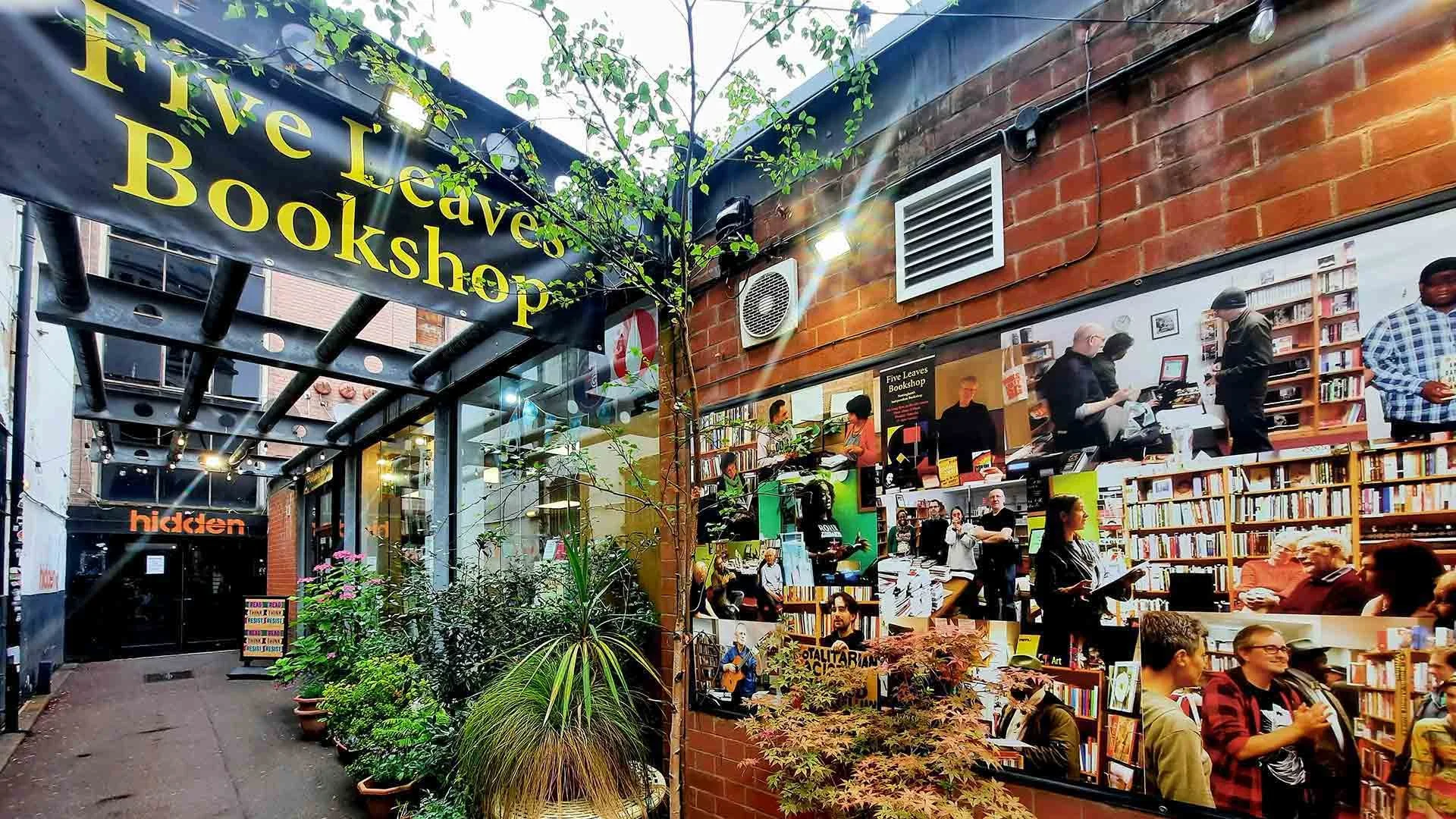
How did Five Leaves begin?
Five Leaves started as a publisher, in 1995. I'd been dabbling in publishing a little, producing the vegan pamphlet already mentioned, a pamphlet on the Animal Liberation Movement by Peter Singer, a booklet on William Morris. I'd also been doing some co-publishing between Mushroom Bookshop and Peace News, but the first ‘proper’ trade book I’d done was a social history of allotments that was published at Mushroom. When I left, nobody was interested in continuing to publish so I took that with me, forming Five Leaves.
The Allotment: Its Landscape and Culture by Colin Ward and David Crouch was a steady seller for a couple of decades and when we published our second book on allotments Five Leaves became the world's biggest publisher of books on the subject! Nobody else was interested. I think we did five in the end and all focussing on social history rather than horticulture. Many years later, we're back to allotments as this summer we’re publishing a photographic book on the pioneer Caribbean gardeners of Hungerhill allotments in St Ann’s. Colin Ward also did Talking Green for us, which was a series of anarchist essays on green issues.
What is the link between anarchism and green issues?
I knew Colin Ward well and I rang him to apologise when I joined the Labour Party in 1985. He said he didn't care whether I was a member of the Labour Party or not, because it's what you do that matters. If you run an allotment site, nobody gets paid to do it, you’re doing it for the common good. You might get the person who's been chair for 25 years but, primarily, it's a democratic organisation. Anybody can take part and money doesn't buy you a place. it's what you do that matters; it doesn't matter what you call yourself. For him allotments were anarchism in action. Draw that out into the wider (non-party) green movement, whether that be conservation or even just litter-picking in your own area and you can see what he meant.
When you began working in the book selling industry, with a focus on radical publishing, can you remember what kind of books were exploring our relationship with the natural world and questions of environmental justice or climate change?
There was certainly no mention of climate change although it had been known about since the 50s, but any writings about that were to be found in research documents. They weren't appearing in the sort of books that would appear on the bookshelves, they would be in academic journals.
We did - at Mushroom - have a countryside section. Faber published classic countryside writers like George Ewart Evans and Ronald Blythe's Akenfield had been around since the late 60s. Peace News discussed environmental justice, there was a strong Pagan publishing scene, and Undercurrents, which was largely focused on environmental issues, was very popular. It wasn't agitational, and focussed on accessible semi-scientific articles. They were, I think, the first to publish the wonderful Cliff Harper illustrations on communal living that had a huge impact.

Cliff’s illustrations were used again and again in magazines and people had posters of them up on their walls; it was like a visual manifesto. This could be our future, and it must be better than how we're currently living. And it's not too complicated; it's not complicated at all. It doesn't have to be about living in a hippie commune in the country, you can do it in Sneinton. You can live in an autonomous terrace with shared washing machines, with your allotments out the back, your shared workshops. You can see all of these ideas of hackspaces, of the 15-minute city, in Cliff Harper's illustrations of that period.
Environmental books had been around for a few years. Silent Spring by Rachel Carson was published in 1962, a book about the decline of nature and environmental harm caused by DDT and ‘forever chemicals’ that became incredibly influential and really brought environmental concerns to the wider public. (The book led to a reversal in US pesticide policy in the face of opposition by chemical companies. A nationwide ban on DDT for agricultural uses was instigated and it initiated an environmental movement that led to the creation of the US Environmental Protection Agency.)
You also mentioned animal rights?
Yes, they were very important in Nottingham. There weren’t many books but there were lots of demonstrations. There was a strong Animal Liberation Front organisation, and plenty of hunt sabbing. I was part of a small group that drew up an Animal Rights Charter that was adopted in part by Nottinghamshire County Council. This included things like all schoolchildren having a veggie option at school dinners, and vegan by request and arrangement; no animal circuses on Council land; no fox hunting on Council land, and future leases of farms on Council land to include exclusion of fox hunting.
Was there a period where you began to see more books come through? Were they connected to political moments or movements?
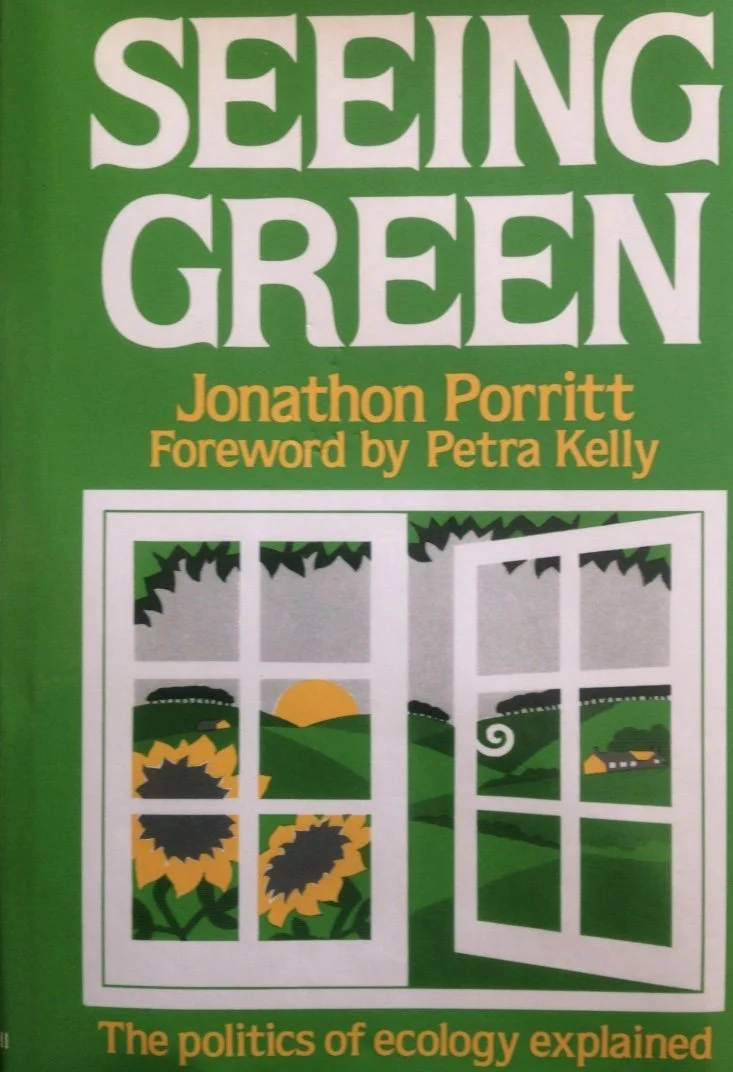
The first properly political book on environmental matters that caught the attention was Seeing Green by Jonathan Porritt, who we put on in Mushroom in 1984. That was the one that seemed to cut through in terms of moving away from a focus on personal choice and talking more about the politics of environmentalism. It is dated now in that he advocated population control. When I did an event recently with him and I mentioned this he was really embarrassed, and is not something he would ever argue for now.
I remember a book by Heathcote Williams, ‘Whale Nation’, that had a big impact in the late 80’s.
Yes; and his book on elephants. They were beautiful books that made people really think about nature. He ran a session at Mushroom Bookshop and turned up late. When I asked him where he had been he said ‘I sleep very slowly’.
But in terms of books specifically about climate change those only really hit popular bookshelves in 2019 with Earth Strike Day and Greta Thunberg. Although there had been the Al Gore book The Inconvenient Truth, it wasn’t until over a decade later when suddenly a lot of books came out.
Of course, there were climate change orientated organisations like XR, which was very different to a group like Friends of the Earth. I think they cut through in a way that nobody else had ever cut through. But, you know, the press has been full of stuff on climate change for a long time now. We stock books about it from time to time, but you can get enough horror stories in the daily papers without having to buy a book of them.
Has there been a developing interest in nature writing over the years? Are there any authors that are particularly popular?
It comes and goes. In fiction, Richard Powers' Overstory has sold masses and popularised the theory of trees being in communication with each other. Robert Macfarlane was perhaps the most important breakthrough writer in terms of a new type of nature writing, that’s now often copied. He’s a pleasure to read, describing nature in an exciting sort of way, making us look at things that we haven't seen before. His books are very personal; you can feel that he’s there while you’re reading them. But he’s tough as well; it’s not all ‘let's go into the forest and you will feel better’.
There have been endless amounts of things which orientate towards self-help, the idea that hanging around with nature is good, wild swimming is good. But inevitably, if you're interested in wild swimming you run up against sewage, and that's a political problem. And inevitably if you are interested in forest bathing, you run up against land ownership, you run up against tax issues over people creating forests that are not sustainable forests because they can get grants for it. And Macfarlane knows all of these things. His books don’t foreground them, but he will talk about them.
More recently there have been quite a few nature books by people of colour, which is a significant change. On the ‘great outdoors’ there’s Anita Sethi’s countryside walking book I Belong Here: a journey along the backbone of Britain. I like Noreen Masud’s A Flat Place, which is part nature writing and partly about dealing with trauma through nature. Michael Malay’s Late Light won the main nature writing prize, the Wainwright Prize. His book is about extinction, migration, and some quite unpopular animals. All of these are memoirs and all of the writers have spoken at Five Leaves; Masud as part of a day called Writing While Muslim. The biggest seller though is probably Robin Wall Kimmerer’s Braiding Sweetgrass about science and indigenous teaching (she is a Native American). I’ve not read that one yet.
My favourite nature writer is Kathleen Jamie, a working-class Scottish poet and essayist. Her book Surfacing explores things literally coming to the surface as a result of climate change in Alaska and Scotland. Objects, artefacts, even whole villages that have been reappearing so that people have been discovering new things about their history and culture.
Are nature or green based books one of the biggest growing areas within the wider book industry?
It goes up and down quite dramatically. Every bookshop will have nice books on nature, but I suddenly realised two or three days ago that we don't have a Green section in the bookshop. We have a tiny Eco-Socialism section, and just a handful of books that are very specifically eco-socialist. But there's nothing where we can say, ‘this is green’ as opposed to ‘nature writing’. And given that the Greens are currently running at twenty percent in the polls that seems strange. We are planning. Zack Polanski has a book out in September, which has a lot of other contributors, based on some podcasts that he's done. We're talking with the Green Party about trying to do some sort of big event. There's no guarantee that Polanski or, say, the new MP Hannah Spencer will come to that; but we’re trying to think how to make this one of our books of the year. Even if it's just opening up in the morning at eight o'clock, having a vegan breakfast, and inviting the former Sheriff of Nottingham to come and launch the book. Anything between that and booking a room for several hundred people.
When you think of the number of books that you sell that are engaged directly with what we might call radical politics, are those that are entwined with this question of environmental justice increasingly popular?
They were for a period at the height of XR, but that arena never recovered from COVID. There were mass demonstrations, samba bands wandering through Nottingham every Saturday night, civil disobedience, and then suddenly you can’t do anything or meet anybody. That's one reason they didn't recover but there’s also the big debate about civil disobedience and where you can take that. Once you've been arrested a few times, can you risk getting arrested again? If nothing has changed, what do you do? Do you do the same again? Or do you try to think of a different way of doing things?
Were there a new group of people coming to the shop connected to that moment?
I don't think so particularly. But you never really know why anybody comes to the bookshop. I don't think having a sort of fairly permanent environmental section particularly draws people in at the moment. But things change. When the Polanski book comes out that might accelerate people reviewing, as they currently are, what it means to be green. Green means workers' rights. Green means Trans liberation. Green means …
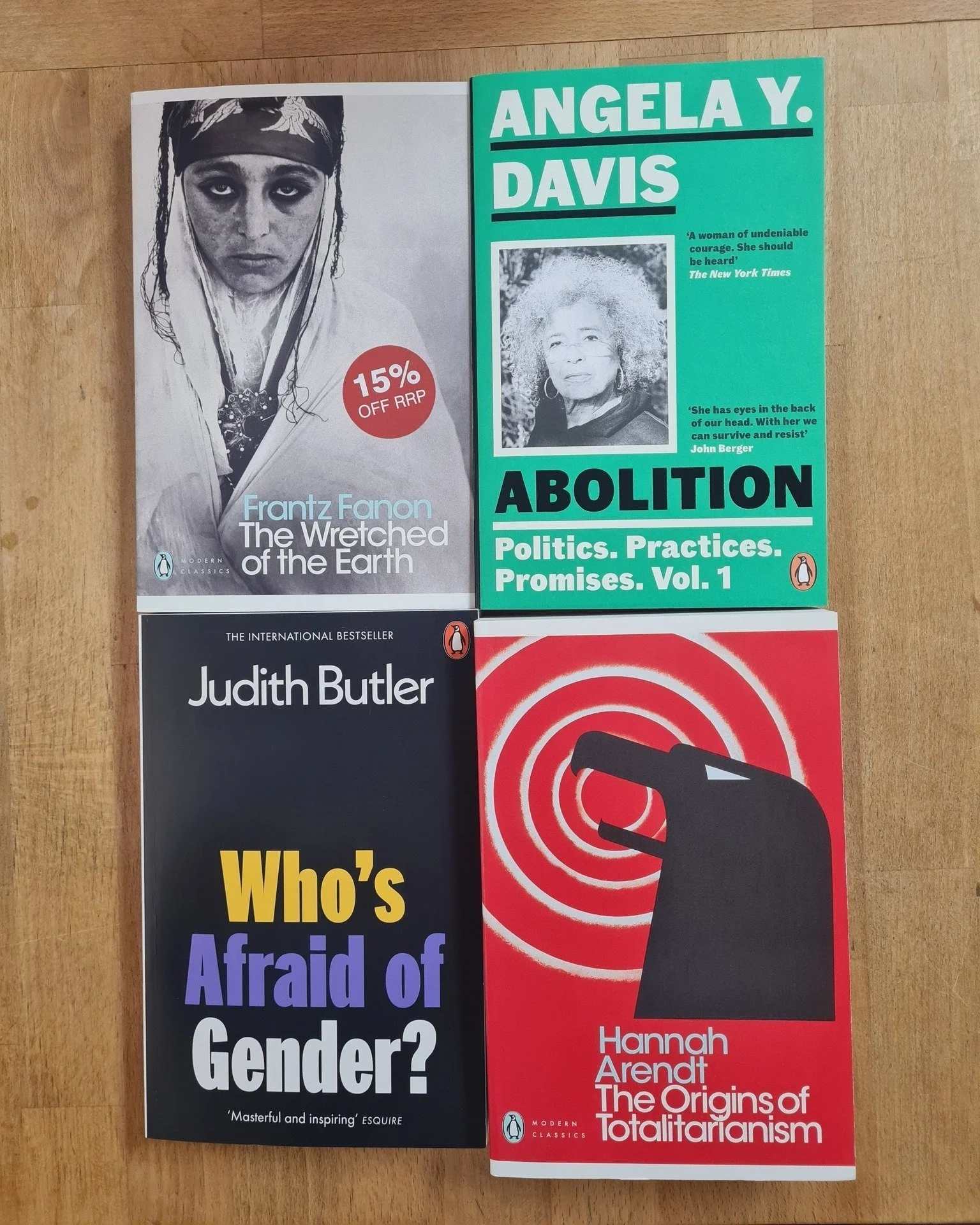
I wonder if some of the foundational books around economic redistribution and different political models will become popular again. Whether people will go back to certain writers or thinkers, or whether – and hopefully – new ones will emerge.
What we've found is a lot of interest with young people in Fanon’s The Wretched of the Earth and Freire’s Pedagogy of the Oppressed; these classic oppositional texts. We’re selling a lot of Hannah Arendt to younger people at the moment.
Is the question of environmental impact something that the shop seeks to address in any way?
The best environmental advice we can give is to stop buying books and join a library! Of course people should do both and we've been prominent in library campaigns. We organised an occupation of Beeston Library and a mass ‘borrow’ quite a few years ago now; and we worked on the first big Save Nottingham Libraries Campaign when we produced a giveaway pamphlet by local writers on the value of libraries, and organised a Lesbians and Gays Support the Libraries event.
You have a thriving events programme. Are there any that stand out for you that were exploring green issues? Have you any coming up?
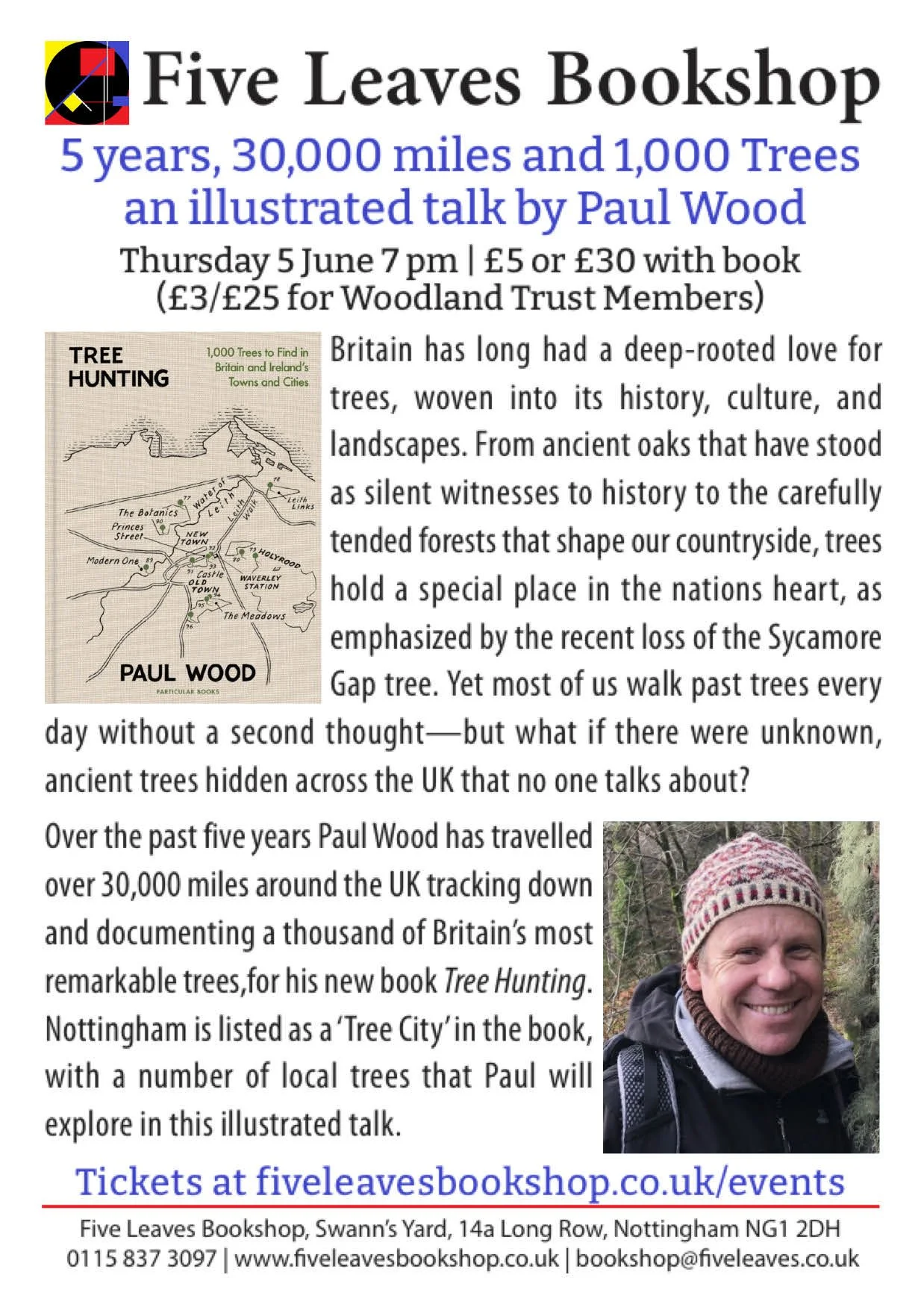
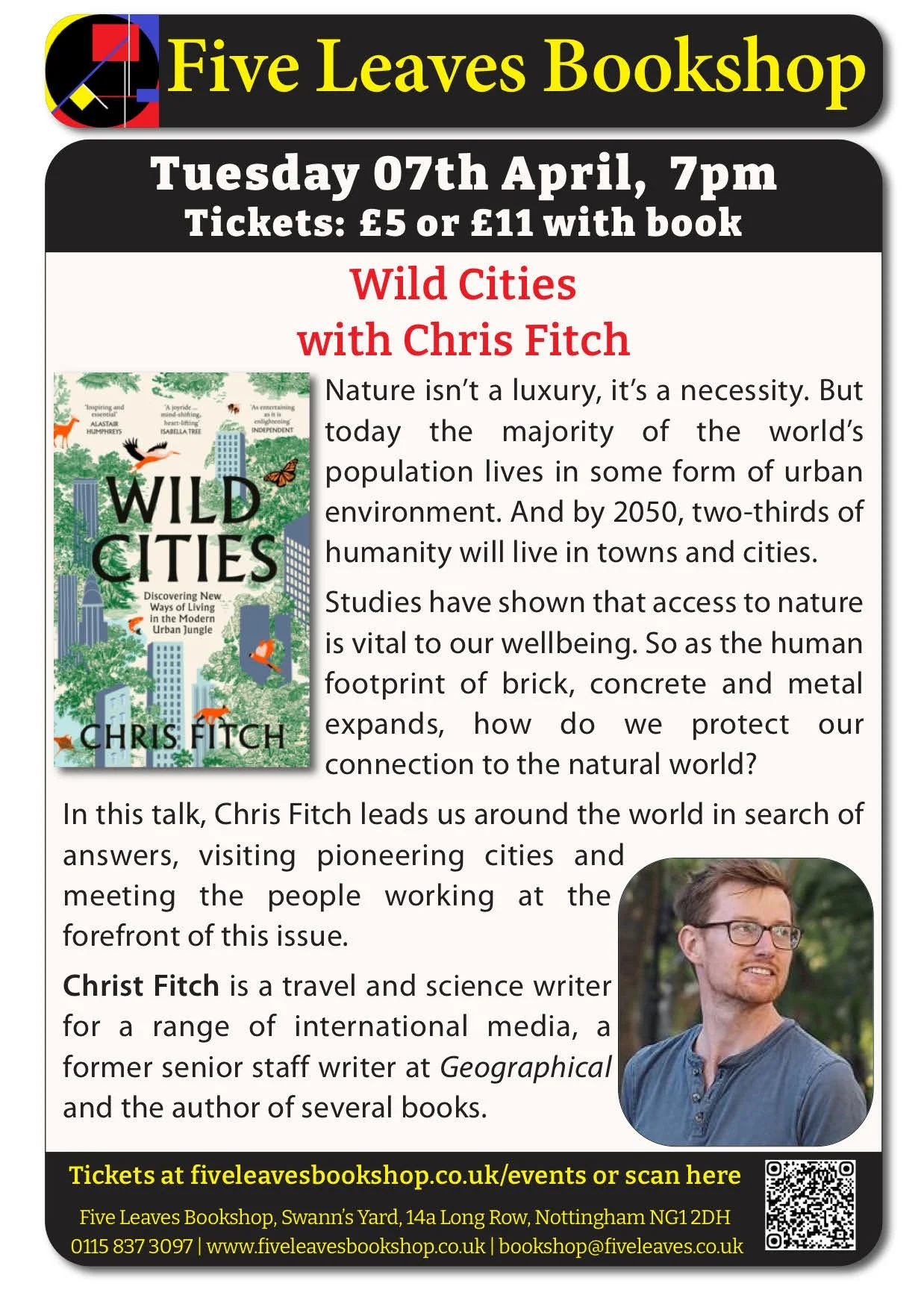
Watch out for the Polanski day on 3rd September. We’ve recently had a well-attended talk on how international cities are greening and wilding themselves, with the room being full of people doing small things in our own area. Jonathan Porritt came back, forty years after Seeing Green, to talk about young people and climate change though mostly we talked about the Middle East. We’ve had several talks about fashion, the environmental damage of ‘fast fashion’ and dumping clothes in poor areas of the global south. Natalie Bennett (who was the leader of the Green Party from 2012-2016) will be coming back for the third time soon. Last August we had a nature series, including a talk on freshwater fish!
How is the independent book selling scene doing at the moment? What are its biggest challenges and are you hopeful for its future?
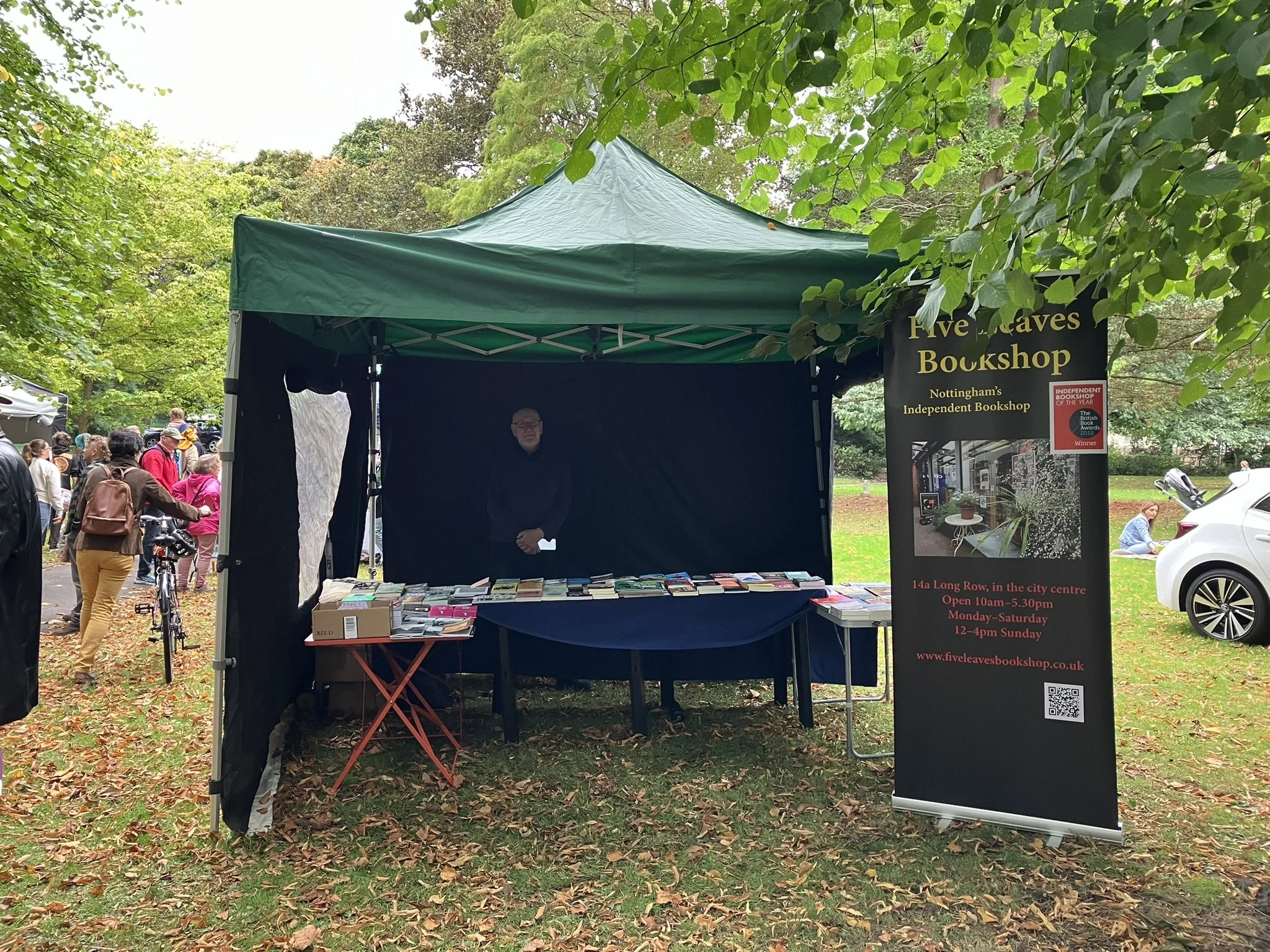
There have been two new indie bookshops recently opened in Newark, a romantasy bookshop is coming in Nottingham, and a new bookshop is opening in Beeston. When we opened in 2013 we were the first indie to open in any city centre for years, and it was the year that the number of independent bookshops fell below a thousand for the first time. That fell to under 850, stabilised and is now above a thousand again. Most importantly the people opening these shops tend to be young, with more women, more people of colour, more neurodiverse staff, and more LGBT+ shops appearing. The new President of the Booksellers Association has done a lot of work on bookshops and sustainability.
The biggest challenges we face are the rating system, the lack of a level playing field on taxation for bricks and mortar bookshops compared to tax dodgers; and the slowness of cities changing to have sustainable, comfortable, economic city and town centres. It would also be nice if local universities returned to spending significant money in the local bookselling economy rather than signing contracts with an American hedge-fund owned company.
Universities push their staff towards public engagement but it they were to adopt something like the ‘Preston Model’ where they try to spend as much local authority money with local businesses as possible, that would be great. It’s a sore point for us because the two universities don't have bookshops anymore and buy books for their libraries from Blackwell's, which is owned by Waterstones, which is ultimately owned by an American hedge fund dealer, Paul Singer, who gave a million pounds to Trump's first inauguration and funds right-wing think tanks in America. Neither Nottingham or Trent University are thinking of how they can spend their money to support the local economy. If you're running a university, and you want your staff to have public engagement then that is the first thing you need to think about. If they were to look at all of their buying they could change the whole nature of the city.
But overall, I’m very hopeful. Thirty years ago, booksellers were ageing and didn’t seem as capable of dealing with changed circumstances. This generation - not my generation - are younger, fleet of foot, and more adventurous.