
Steve Smith - Community Organising in Nottingham
Interview with Steve Smith, written by Andy Barrett
Given the importance of local community action as a way of building wider movements engaged in exploring and responding to the challenges of climate change, Andy Barrett went to visit Steve Smith to find out more about community organising and to discover what support is available to help people set up their own community action groups.
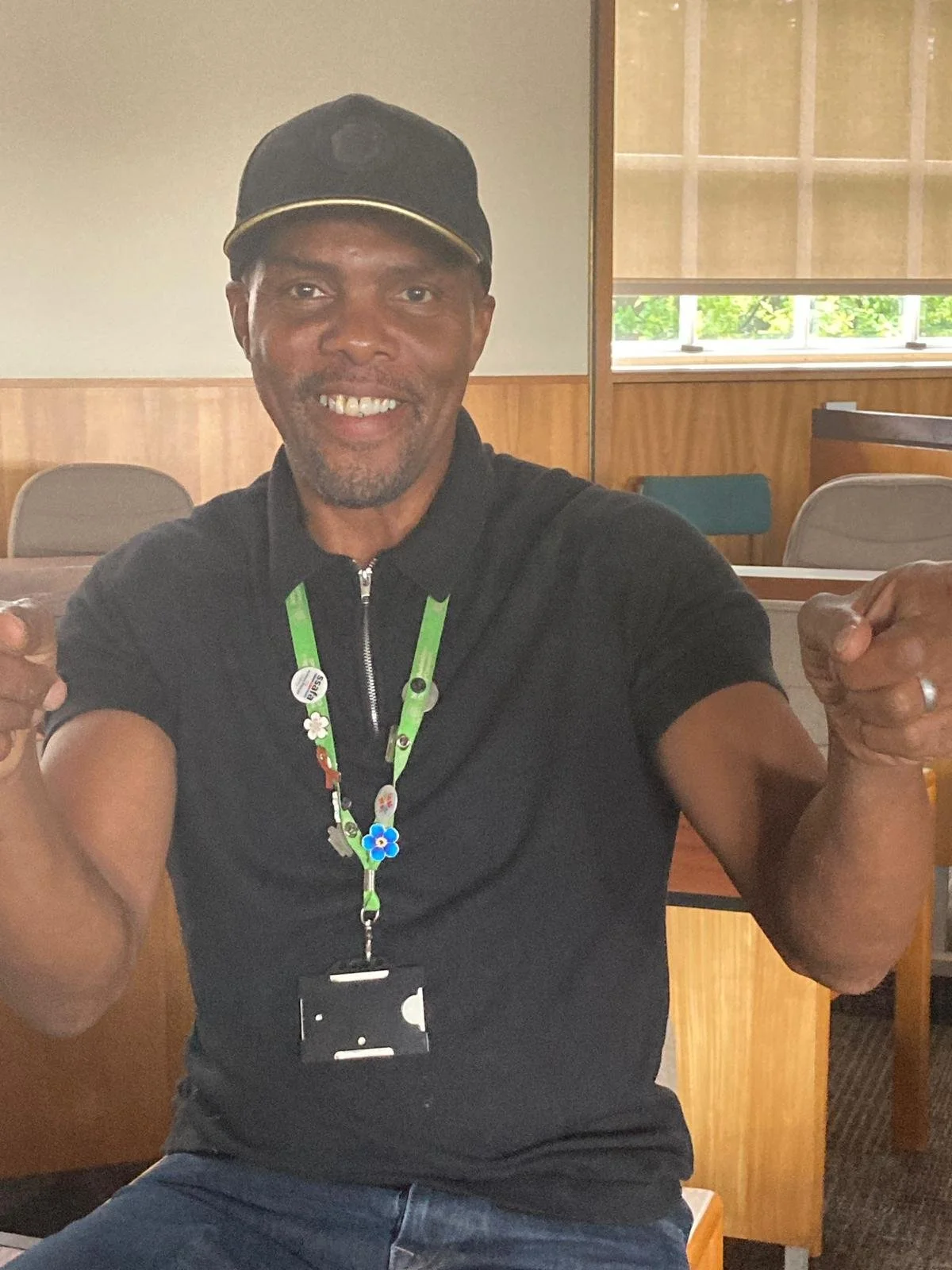
Can you start by explain what it is you do?
I'm a community organiser, both as a director of the National Academy of Community Organising and I also work here at the County Council where I started as a Neighbourhood Co-ordinator, which is really a community organiser under a different name. Over the last eight years, we’ve set up or helped residents to set up around two to three hundred community action projects across the County.
The function of a community organiser is to bring people together to take action on the things that they love and there are two distinct types of community organising. There is broad-based community organising, which you can see in groups like Citizens UK, which is inspired by people like the American activist and political theorist Saul Alinsky and which is often linked to ideas of direct action. And then there is the kind of focussed community organising that I’m involved in, which builds on the ideas of the Brazilian educator and philosopher Paulo Freire and an understanding that people within a community have the knowledge required to change their community. The role of an organiser is not to change a community but to help them draw out solutions and create the conditions for the change that they are looking to happen. There is a big focus on empowerment, on believing that people have the answers and that you just need to create the conditions for them to talk and come together.
Broad-based community organising can mobilize large numbers of people quite quickly, but often with shallower roots. In a march for instance, if you look at the different placards with their range of reasons and agendas for attending you can clearly see that it’s a broad-based activity. Whereas with grassroots community organising you are building from the bottom up; it could take years to get to a stage where you have the kind of larger collective movements that appear in a march because you have to listen to residents individually, one by one. It’s a slow-burning process and is also one where you are beginning without the kind of structures that other forms of mobilisation may have available to them through churches or unions or protests.
I presume from what you’re saying that community organising is also about finding the kind of structures people want or which might be the most useful and then helping them to create these?
Well, the kind of activities that might be animated, and the kind of groups that could be formed cover a really wide range and thinking about structures is really the last part of the process. We have a process within the community organising community that follows a three-pronged approach based on a series of questions we call ‘Heart, Head, Hands’. We’re going to start by trying to find out how you feel about things; what makes you angry, what you're really passionate about. We need to go there first because it's always those feelings that are going to drive people to take action. If you just start off with a consultation, talking with a group about plans and ideas you may come up with all kinds of suggestions, but when you challenge them to ask if they would be part of the change they want to see they will often tell you they haven't got the time. It’s after finding out about their emotions that we move onto ‘Head’ questions, exploring ideas for change and then ‘Hands’; what are you prepared to do to push those ideas forward?
So listening is central?
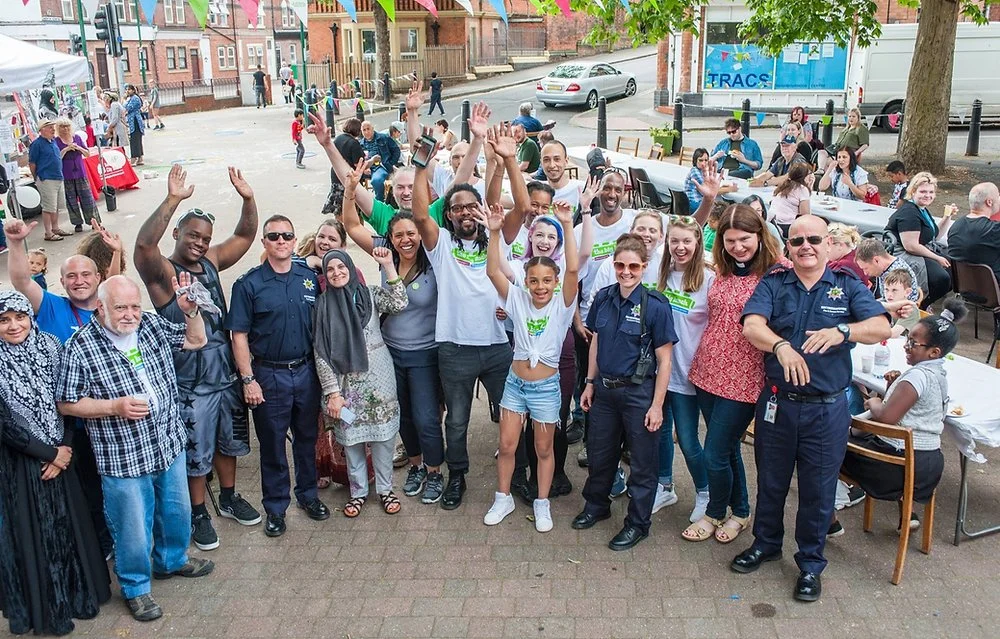
Yes; it’s not about trying to bring people on board, but to draw connections between people by understanding what it is that concerns them. Community organising work is sometimes about engaging with specific groups and helping them to formulate ideas but it’s often about engaging with larger communities to uncover what it is that is bothering them. I started as trainee community organiser with the task of listening to five hundred residents across Sneinton and Bakersfield because the National Programme of Community Organising had identified Sneinton as an area of deprivation. The aim was to support the community in setting up at least ten community action projects and we ended up with all sorts of initiatives; coffee mornings, litter pickings, the setting up of football clubs and Nottingham's first social eating cafe, as part of an allotment project.
In that work I would be knocking on peoples’ doors and having a conversation with those who were willing to talk with me. During those discussions I might ask people if they would be willing to meet someone else within their community who had also mentioned some of the things that they were passionate or angry about, or if they knew of anyone who shared the same feelings. The challenge is to find a way to move things on, to say ‘look if I was to set up a small meeting would you be willing to come along’. The structures we need to build through this listening are, most importantly, connections between people with similar concerns and passions. That is the structure, and from there it’s all about organic growth. Sometimes it really is very small stuff; maybe a group of people who want to come out every month to pick litter, plant a few flowers and paint some doorsteps. That might be the extent of it.
We then help them to develop their ideas; bringing them together into groups, helping with facilitation tactics and techniques to create ground rules for discussion to ensure that everyone’s voice is equally heard. Once the group has begun to get an idea of where they want to take their ideas, we help them with some longer-term visioning, asking them how they want to see things in five or ten years’ time and teasing out the longer-term strategy they need to employ. Do they want to remain as a loosely formed community group, or something else? I can then talk about the different organisational structures that are available such as charities, CIC’s, social enterprises, and about the different avenues where funding could be sought. We can walk alongside them on that journey, of how to navigate the funding world, some tips for applying, and even how to manage their money once they’ve got it.
But our job isn’t to hang around, it’s to help initiate and provide techniques and structures that will help groups be resilient. There are groups I’ve helped set up that are still going after ten years. I would say we’re like Nanny McPhee; we were there when we were needed but when you start to become a little reliant on us, we’ll be pulling away from you. This is the spirit of the ideology of Paolo Freire; that you’ve already got this, you’re full of the knowledge and ideas to change things for the better.
It sounds quite a challenging prospect; of going door to door or asking people on the street for their feelings?
It can be but you soon find out that people are always willing to talk if you approach them in the right way. There was one time in Sneinton when I was working with two community organising trainees and we came across a gang of lads with their hoods up who looked quite intimidating. I’d got a reputation by then of being pretty good at this, so I knew I was going to have to approach them, and to have the same kind of conversation that I have with everyone. They were just as passionate for the area and the community as everybody else; and what they wanted was to look after the younger kids. We ended up helping them to set up a youth project, the idea of which came right in that moment. It ended up being a mentoring project called Visualise, Believe and Achieve, and we helped them to get funding for it as well.
There was another time when some people from the Department of Culture, Media and Sport had come to visit, because the National Community Organising Programme was beginning to make waves with the way we were able to engage with people, and again we came across a gang. They said ‘you guys better just move on, we're not interested’ but I could see that one of the older ones showed some interest and so we started talking. I followed the Heart, Head, Hands approach and asked what puts a smile on their faces when they think about the area which they weren’t expecting, and they started telling us how much they loved living there. When I asked what made them concerned, we got onto the subject of needles that people had been telling me that had been found around the outside of a local park. One of the guys said, ‘leave it with us, we're going to sort it’. I don't know what happened, but they did and those needles never came back.
It feels that the kind of public spaces where people with different views can come together to have conversations are shrinking, that we’re living in a moment where people seem to have increasingly polarized views.
Communities have broken down, and neighbours aren't talking to each other. Groups are often fighting for similar pots of funding and are competing with each other when if you got them together in a room they’d see they’re trying to do the same thing. But again, you need to have the conversations to understand why people feel the way they do because it’s easy to have assumptions about people that can often be proved wrong. There was one conversation I had with a guy who was a member of the EDL, and it turned out his frustration and anger stemmed from the bins being left out on the street. What he wanted was a community where everybody got on and all the bins were put back in. His idea was to set up a multicultural football team so that the local children could start interacting and breaking down the barriers that he was aware of.
How does it work when you are asked to facilitate groups that already have some kind of loose alliance, or maybe even a clearly defined structure?
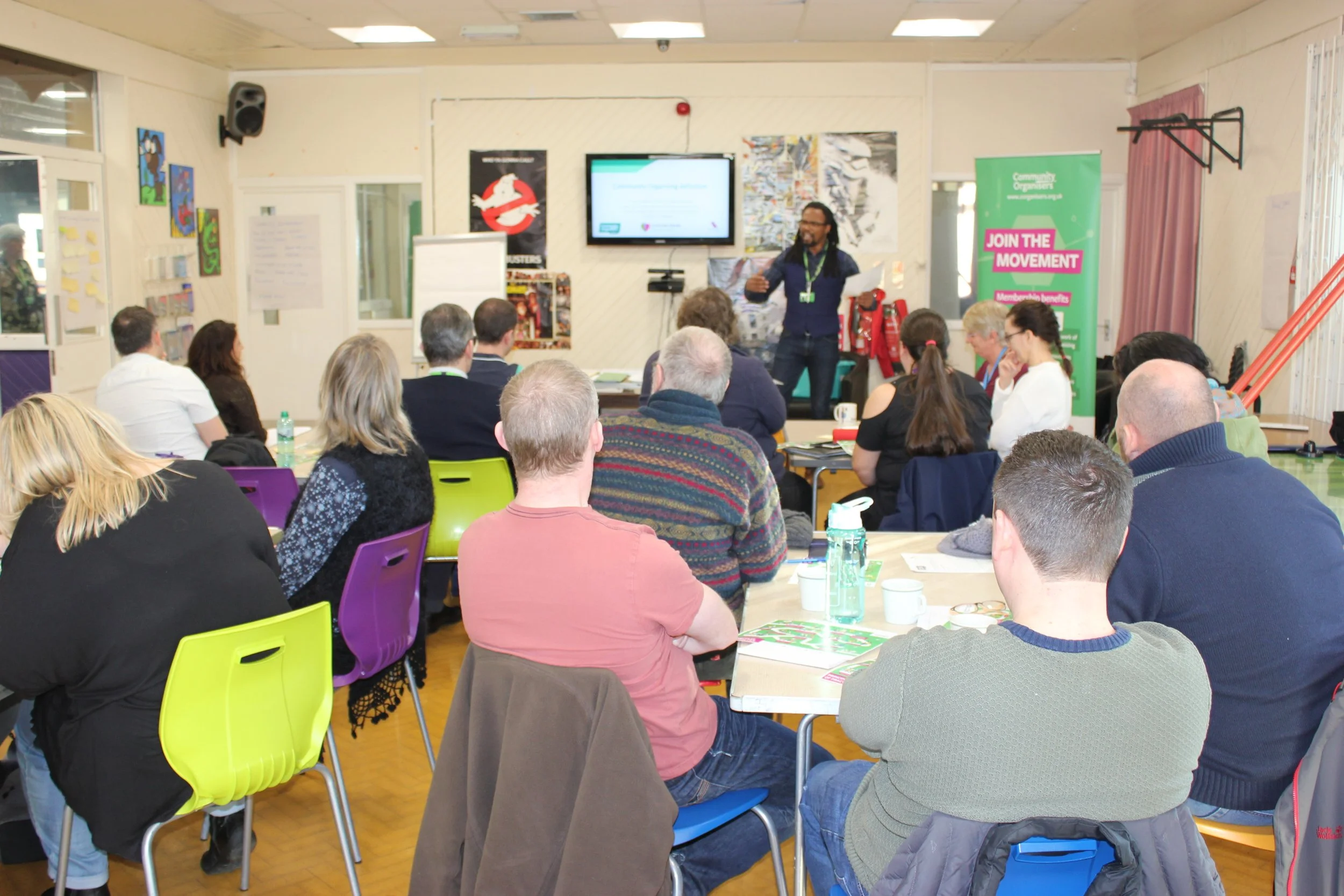
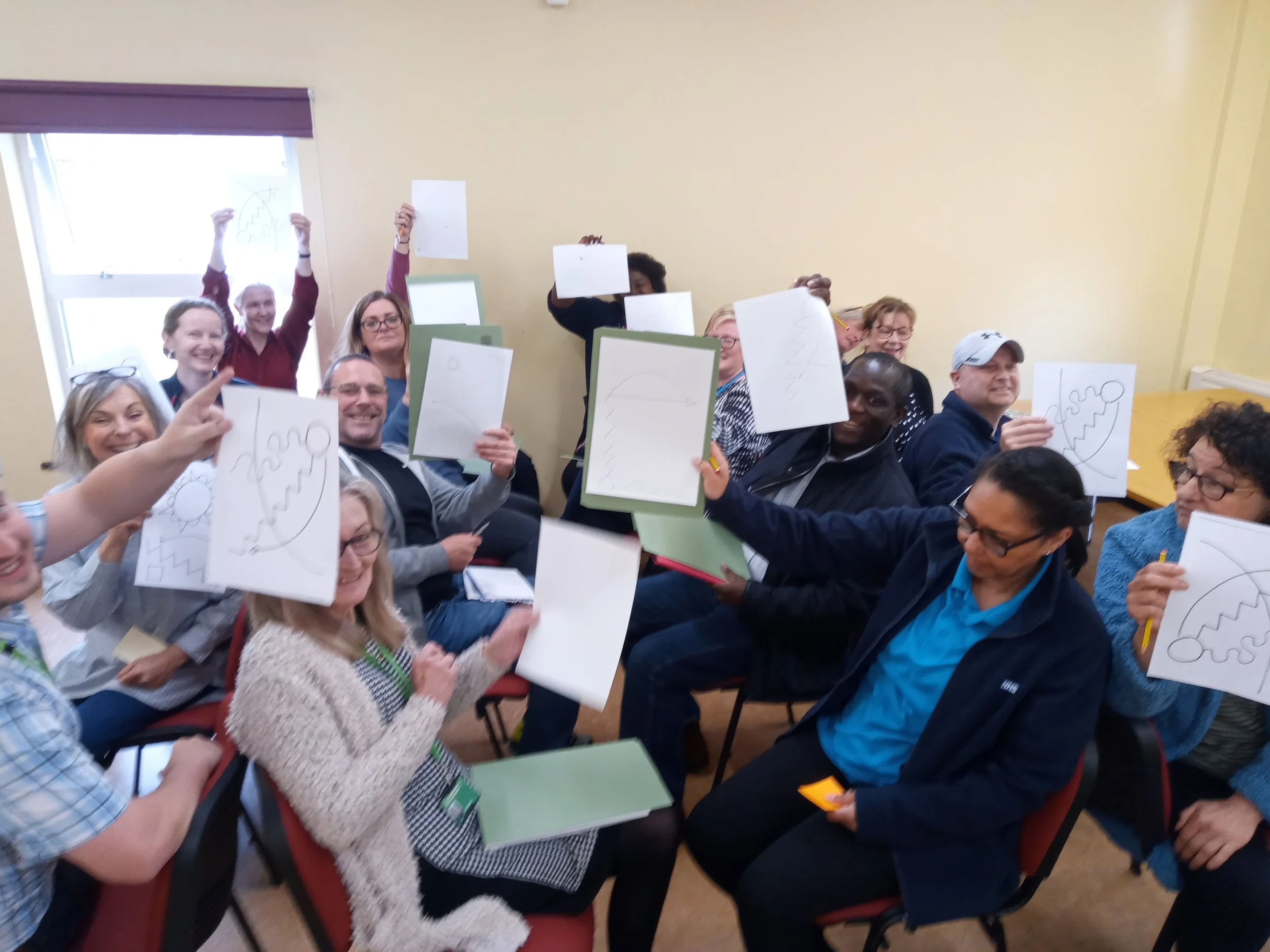
That work isn’t part of my job here at the County Council, whilst it did once focus on mobilising community action it now focuses on strengthening the voluntary sector as a whole. But I do run workshops and training for groups through my position as a director of the National Academy of Community Organising. There is a cost that comes with it but it’s pretty minimal. Sometimes if a group asks me to get involved and they have no budget at all then I will do it. One of the key things that NACO is very keen on is training people up to do this kind of work, but we often find that it’s difficult for people to commit to it because of their need to find a job to support themselves outside of the world of community organising. But as I’m a director of NACO I do like to engage with groups when I can.
In many respects we are a bit like a consultancy. This week I’ve met the Greenwood Community Forest group to see how we can do some community organising training. They have a network of groups looking after much-loved green spaces who want to understand how to use this listening approach to bring younger people into their groups, because they are currently not getting involved. So again, it’s about teaching this method of conversation, of asking younger people what it is that they feel about these spaces. That’s what needs to happen first to catalyse community action, and then you can say ‘OK we've heard you and we’ve got a meeting coming up about this, would you want to be part of that?’ We’re also a bit like a community dating agency putting people and groups together, which comes from having had so many conversations. It allows us to connect those who have similar ideas or have tried similar things and might be willing to share their knowledge.
We do work with all sorts of groups, from small community organisations through to local government. I recently did some work at the Green Meadows Festival, focusing on engaging young people and residents to gather insights on what they love about their community, what frustrates them, and ideas for improving it.
You can read the Green Meadows Festival Engagement Report here.
In January we're running a two-day intensive community organising training workshop for the Bassetlaw District Council Labour Party. It’s always interesting when you’re working within structures that already have ways to engage with communities and who are often keen to say ‘oh we do all this listening already’ when they’re not. Those with power are much more comfortable with the existing structure where people ask them for help and they say ‘we'll try and get it done for you’ rather than when communities start organising themselves.
The fact that the County Council have taken on this approach and that I’m working here aligns with their strategy to help people to help themselves, because it's the only way that anything is going to be sustainable. Power is constantly changing hands, and priorities are always changing, so you have to make sure that the work is being done as much as possible at a grass roots level. Those in power have to realise that you can support a lot more people if you're helping them to help themselves.
Are there any online resources that people can look at?
There’s a Learning Resource page on the website with all kinds of materials. If people want to download them they need to submit their contact address and we’ll add them to the mailing list; but the materials there are free to use at that point.
There are guides on: Social Action Hub Framework / Principles of Practice / Community Organising Framework / A Guide to Power Analysis in Community Organising / Organising Effective Listening Campaigns / Issue Based Organising / A Guide to Facilitating Small Groups / Starting out with Community Organising – A guide for organisations / A Guide to Popular Assemblies. There’s also a book for sale called Community Organising Compared.
Organisations can buy into an annual package which includes additional resources, and weekly hourly online workshops which use our network to see what different groups and members are doing. That’s really important; there might be an organisation doing fantastic work in Wales around foodbanks or allotments that we can learn from. We’re also working to develop citizens assemblies around the country where people can discuss themes that have been discussed locally.
Are you finding that there is more interest in work engaging with environmental concerns?
When I've been commissioned to do listening consultations for green organisations, such as at the Green Meadows Festival, I’m always aware that perhaps there’s an expectation to be focussing on green issues when very often people want to talk about other things; because as I’ve said we don’t come into a space with an agenda. But yes, there are always people who want to engage with their local landscape for all sorts of reasons. One of the groups I help set up, the Friends of Valley Road Playing Field, were motivated to improve their green space so there was somewhere for their kids to play. (The group were successful in getting funding for this work). I also have to say that the demographic of groups engaging with environmental issues does tend towards those from more affluent backgrounds or people that have time on their hands, people who have degrees and own their own houses.
Sometimes groups only last a short time but have a real impact. There was one I was involved in called Bee Aware, which was trying to create an environment that was conducive to bees that came and went within six months, but in that time Nottingham City Council adopted all the things they were talking about.
What is your feeling about the kind of activism that we’ve seen with groups such as Just Stop Oil?
It’s very different from where I’m coming from. When I was growing up I was very inspired by Malcolm X, of that idea of ‘by any means necessary’ and of rebelling against the system; but there is another way. I know we have the success of the Suffragettes and some of the civil rights movements but a lot of campaigns don't get where they want to go. They’re not fighting in the right way; they're not marching in the right place. I met a group called Absurd Intelligence last week, a think tank that comes from the activism route who are interested in how you use creative acts to have conversations and develop awareness, of how to create spaces for dialogue in a fun way. I think that’s a more powerful way of building support and am really interested to see how that develops. (‘To have a hope of coping with what is coming down the line we urgently need to defibrillate the collective imagination.’)
Can you tell me about Neighbourhood Forums and their connection to the Localism Act, as this seems like a really important piece of legislation in terms of giving communities more power over decision making in their area. (Here is a useful ‘plain English guide’ to the act).
It was introduced in 2011 and aimed to move some decision-making powers away from central government to councils and communities. It’s not being widely publicised by the current government perhaps because it gives communities more power than I think many realise. One of the more interesting things it does is around something called the Community Infrastructure Levy. This is paid to the local authority when new developments are taking place to support the cost of new infrastructure. What has generally happened is that councils used to put that money in their coffers and spend it wherever they wanted, rather than within the communities that were most affected by new development. The Localism Act ensures that local people can have a say about where this levy should be spent.
To do so you need to create a Neighbourhood Planning Forum which must consist of at least 21 people of a voting age who live or do business within that neighbourhood; and the council will verify that information. Once that forum has been set up, they can decide where the levy money will be spent in the local area, which makes much more sense in terms of responding to the potential inconvenience of new development. It could be spent on a local park or support local community centres, mend a church roof, whatever the forum decides. Obviously planning and development is a complicated business but it’s really worth looking into if people are concerned about what is happening in their local area, or can see that new development is taking place and want to find out if there are ways of helping to guide that or to ensure that any money that is generated stays in the area. Maybe it could be used to create structures that alleviate flood risk, develop community energy projects or which help to develop green spaces.
(Here is a toolkit for establishing a Neighbourhood Forum, by Locality, a ‘national membership network supporting local community organisations to be strong and successful’.)
What's the biggest frustration for you in this work?
A lack of Government investment, because this approach does work and they have invested in it before. I think if you saw one or two community organisers in every deprived area, you’d really notice a difference. Every year we seem to be invited to meet people within government who say ‘we think the work you’re doing has real value’ and then a year later we’re invited to speak to somebody else.
Ideally it would be nice if we could change the system so that we didn't have to do this work. But there's plenty of people that have spent years and years trying to make systematic change and they haven't achieved it. Sometimes you need to take the small win. Sometimes it's a sticking plaster; it’s not doing the work that is really needed but there's still a need for that sticking plaster. For people to set up their food banks, to support people with dementia, to tackle loneliness, and to build connectivity and pride in their area. We enable people to do things within their community, to empower and train them, to help them to think solutions through, and connect them with like-minded people. You have to keep on planting the seeds for the bigger change that we really want to appear.
I’ve talked a lot about listening, but you know actually what’s happening is that I’m asking a powerful question and then letting you talk. So, this work could also be translated into the art of asking powerful questions. The better your questions are, the more useful the responses will be. All the listening is done with the intention of catalysing community action; for people to put their hand up to take action to make the change they want to happen.
So, if somebody in The Meadows is interested in exploring ways to think about setting up a community action group how could you help them?
If you go to the website you can reach out to us to commission training or consultancy work. If, after doing some listening, someone wanted support to bring together a group of people I’d be happy to help facilitate that. It’s important that the first meeting goes well. This work is a process and although it’s not rocket science you do need to plot your way through it with care. I'm originally from The Meadows, and I still have an affinity with the community there. So, if people have a specific project or idea they can contact me directly on steve.smith@corganisers.org.uk and I’ll endeavour to make the time away from my council job to do what I can. And of course, we’re always looking for more people to be trained in community organising so do have a look and join the movement!